 Skip to content


U-Shape Modular Kitchen Design (2026): Smart, Spacious, and Seriously Practical
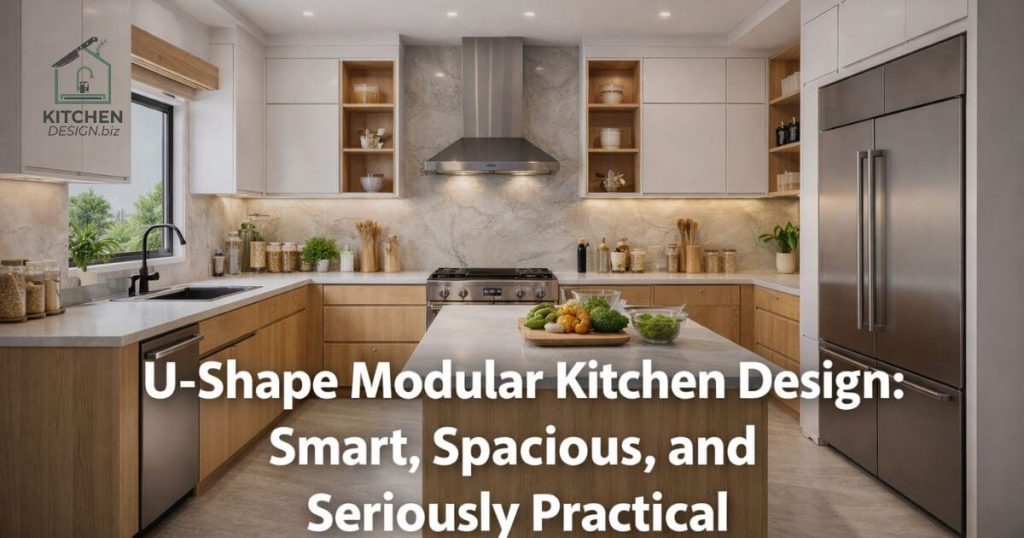
A U-shape modular kitchen gives you three walls of functionality, maximum storage, and a workflow that simply makes sense. If you cook daily, host often, or just want your kitchen to feel organized instead of chaotic, this layout deserves your attention.
Design experts consistently recommend the U-shaped layout for medium to large kitchens because it supports the classic kitchen work triangle—the optimal distance between the sink, stove, and refrigerator. The National Kitchen & Bath Association (NKBA) supports this work-triangle principle as a foundation of efficient kitchen planning. When you follow it, you reduce unnecessary movement and improve comfort.
Let’s explore how a U-shape modular kitchen design works, why it performs so well, and how you can plan one properly.
What Is a U-Shape Modular Kitchen?
A U-shape modular kitchen uses three connected walls or cabinet runs that form the letter “U.” Cabinets, countertops, and appliances line each side. The center remains open for movement.
Unlike traditional built-in kitchens, modular systems use factory-made cabinet units. These units improve precision, reduce installation errors, and allow customization.
In simple words: you get structure, storage, and smart flow—all in one layout.
Why U-Shape Modular Kitchen Designs Work So Well
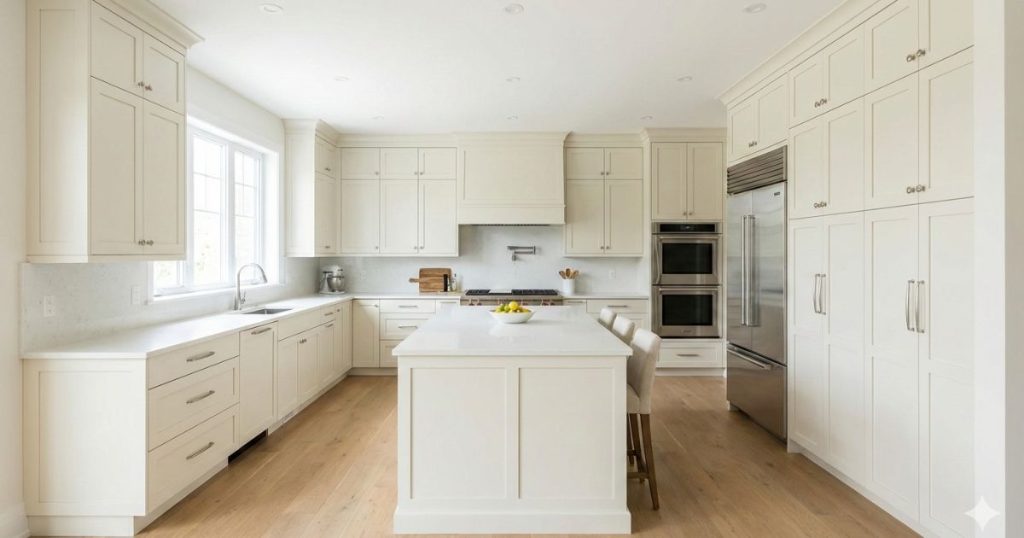
1. Efficient Work Triangle
The U-shaped layout naturally supports the work triangle concept recommended by the NKBA. Ideally:
- Each leg of the triangle should measure between 4 and 9 feet.
- The total perimeter should range from 13 to 26 feet.
When you place the sink on one wall, the stove on another, and the refrigerator on the third, movement feels smooth. You don’t zigzag across the kitchen. You glide.
Cooking becomes less tiring. That matters more than most people realize.
2. Maximum Counter Space
Three walls mean three continuous work surfaces. That gives you:
- More food prep space
- Separate zones for cooking and cleaning
- Dedicated baking or coffee corners
According to design studies shared by Houzz Kitchen Trends Reports, homeowners prioritize counter space and storage over decorative upgrades. A U-shape layout naturally supports both.
If you enjoy cooking from scratch—or even assembling elaborate weekend brunches—extra surface area changes everything.
3. Exceptional Storage Capacity
Storage wins kitchens. Period.
A U-shape modular kitchen allows:
- Base cabinets on three sides
- Wall cabinets for vertical storage
- Tall pantry units
- Corner carousel systems
You can also add pull-out organizers, drawer dividers, and deep storage drawers. Modular kitchens make these upgrades easier because manufacturers design them as integrated systems.
When storage works, clutter disappears. And when clutter disappears, your kitchen feels twice as large.
Ideal Room Size for a U-Shape Modular Kitchen
Not every space fits this layout.
Design professionals suggest a minimum width of 10–12 feet to ensure comfortable movement. If the space feels tight, you risk creating a “closed box” effect.
For larger rooms, you can:
- Add a peninsula
- Integrate a breakfast counter
- Leave one side partially open
If your kitchen measures under 8 feet wide, consider a galley layout instead. Always prioritize movement clearance. The NKBA recommends at least 42 inches of aisle space for single-cook kitchens and 48 inches for multiple cooks.
U-Shape Modular Kitchen With Island: When It Makes Sense
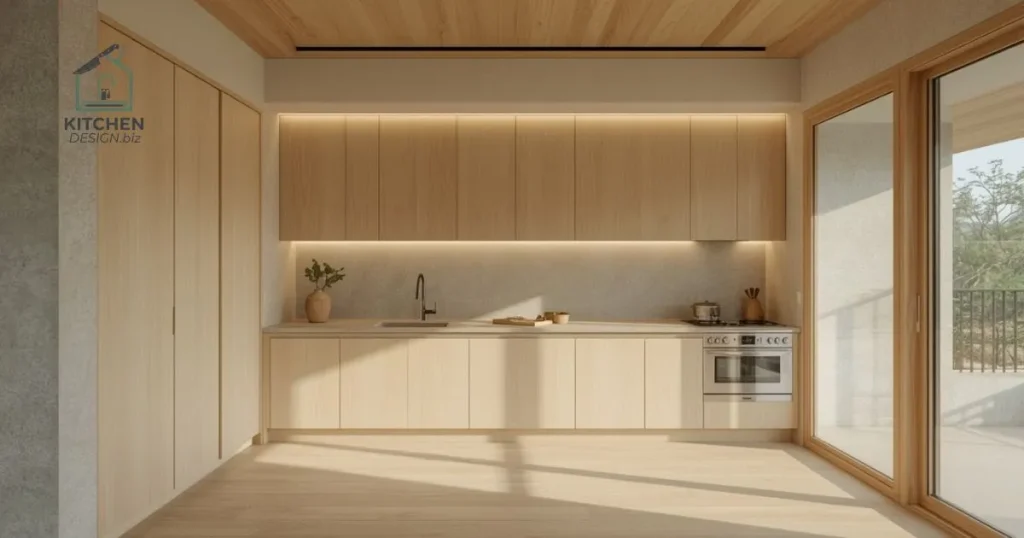
Many homeowners ask, “Can I add an island?”
Yes—but only if space allows it.
You need:
- Minimum 36–48 inches clearance around the island
- Enough depth to avoid blocking cabinet doors
In larger kitchens, an island improves functionality. You can use it for:
- Casual seating
- Extra prep space
- Built-in cooktop or sink
However, never force an island into a tight room. A cramped island creates daily frustration. Design should support comfort, not ego.
Smart Zoning in a U-Shape Modular Kitchen
Smart kitchens divide tasks into zones. This method improves efficiency and organization.
Cooking Zone
Place the hob, chimney, and spice drawers together. Keep oils and utensils nearby.
Cleaning Zone
Position the sink, dishwasher, and waste bins on one side. Add pull-out garbage systems to keep things tidy.
Storage Zone
Install tall pantry cabinets at one end. Use pull-out trays for dry goods.
Prep Zone
Leave uninterrupted counter space between sink and stove.
This zoning strategy aligns with modern kitchen planning principles promoted by professional kitchen designers worldwide.
Best Materials for a U-Shape Modular Kitchen
Choosing the right material protects your investment.
Cabinet Materials
- Plywood (BWP grade): Strong, water-resistant, reliable.
- MDF: Smooth finish but less moisture-resistant.
- HDF or particle board: Budget-friendly but less durable.
For Indian and humid climates, many designers recommend BWP plywood due to its moisture resistance.
Countertop Materials
- Quartz: Durable and low maintenance.
- Granite: Natural and heat resistant.
- Solid surface: Seamless appearance.
According to the Marble Institute of America, natural stone like granite offers strong durability when sealed properly.
Choose materials based on usage, not just appearance.
Lighting Strategy for U-Shape Modular Kitchens
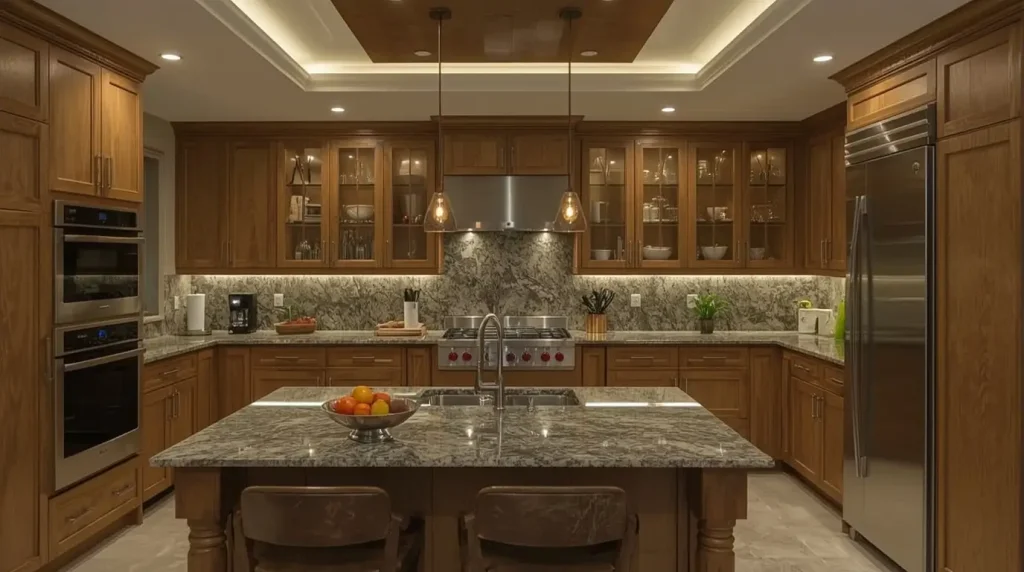
Good lighting transforms functionality.
Use three layers:
- Ambient lighting – Ceiling lights for overall brightness.
- Task lighting – Under-cabinet LED strips for prep areas.
- Accent lighting – Inside glass cabinets or toe-kick lighting.
LED lighting reduces energy consumption compared to traditional incandescent bulbs, according to the U.S. Department of Energy. It also lasts longer and produces less heat.
In a U-shape layout, shadows can form in corners. Under-cabinet lighting solves that instantly.
Ventilation and Airflow Considerations
With three walls surrounding you, ventilation matters.
Install a properly sized chimney hood above the cooktop. The Home Ventilating Institute (HVI) provides guidelines for calculating required airflow based on kitchen size and stove type.
Avoid placing the cooktop directly under a window if strong wind affects flame stability. Safety always comes first.
Design Styles That Suit U-Shape Modular Kitchens
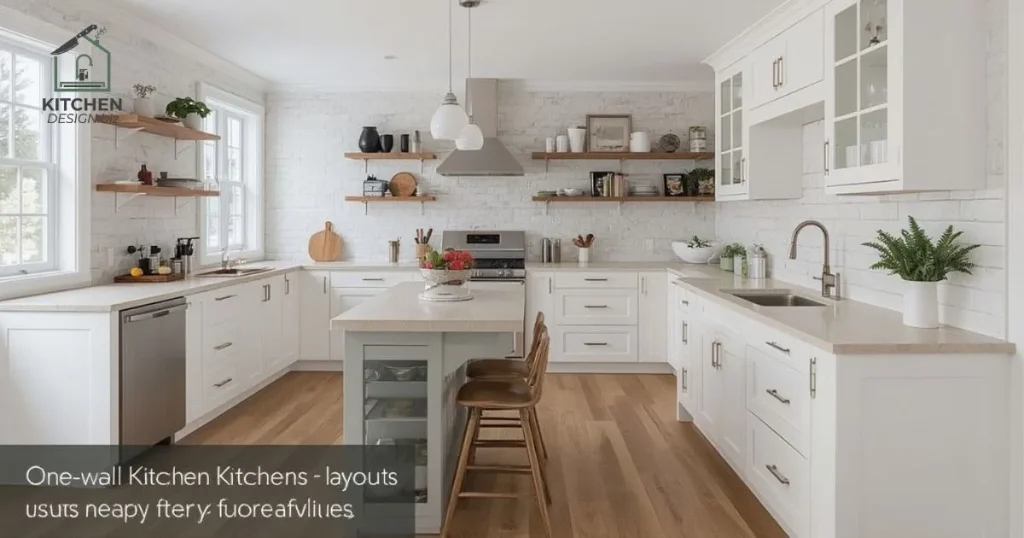
This layout adapts to many aesthetics:
- Modern minimalist
- Scandinavian
- Contemporary Indian
- Industrial
- Transitional
Keep color palettes light in smaller rooms. White, beige, and soft grey reflect more light and make the space feel open.
Add warmth with wood finishes or matte laminates.
Pros and Cons of a U-Shape Modular Kitchen
Advantages
- Excellent workflow
- Abundant storage
- Clear functional zones
- Suitable for serious cooking
Disadvantages
- Requires adequate space
- Corners need smart hardware
- May feel enclosed without good lighting
If you solve lighting and corner storage properly, most drawbacks disappear.
Common Mistakes to Avoid
Even great layouts fail without smart planning.
- Ignoring clearance space
- Installing oversized appliances
- Blocking corner cabinets
- Choosing glossy finishes in low-light kitchens
- Overcrowding upper cabinets
Always measure twice. Then measure again.
Cost Considerations
The cost of a U-shape modular kitchen depends on:
- Material selection
- Hardware quality
- Appliance integration
- Customization level
Modular kitchens often cost more upfront than carpenter-built systems. However, factory precision improves longevity and finish consistency.
Invest where it matters—cabinet structure and hardware. Decorative upgrades can wait.
Is a U-Shape Modular Kitchen Right for You?
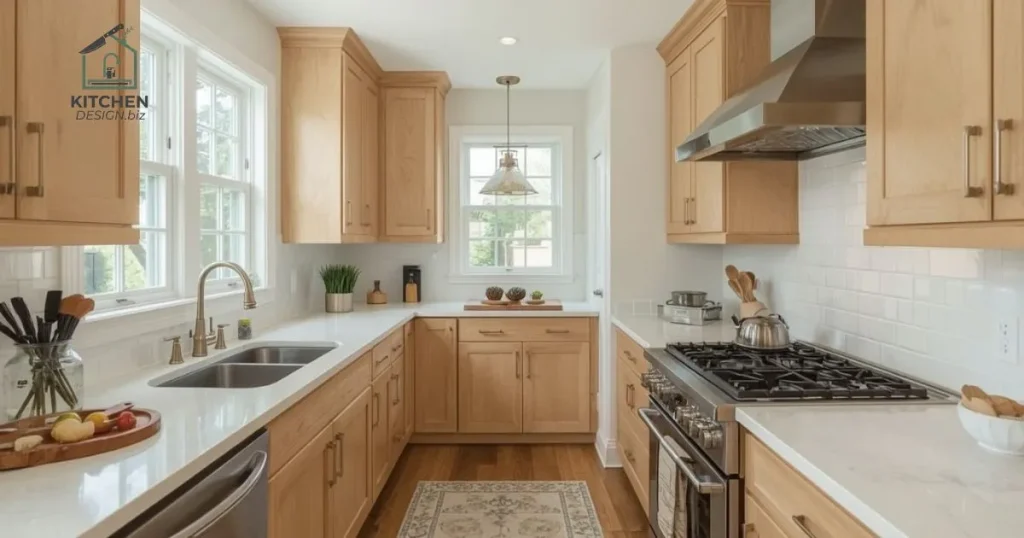
Choose this layout if:
- You cook daily
- You need serious storage
- Your kitchen width exceeds 10 feet
- You prefer structured workflow
Avoid it if your kitchen feels narrow or lacks natural light.
Design should reflect lifestyle. Not trends.
Final Thoughts
A U-shape modular kitchen offers structure, efficiency, and generous storage in one intelligent layout. It supports the work triangle principle, enhances organization, and adapts to various styles.
When designed properly—with correct spacing, smart lighting, and durable materials—it becomes one of the most practical kitchen layouts available.
If you plan carefully and follow professional guidelines, this layout will serve you for years without frustration.
For more layout inspiration, read our internal guide on Modern Kitchen Layout Ideas.
For official kitchen planning standards, explore the National Kitchen & Bath Association guidelines at https://nkba.org.
FAQs
1. What is a U-shape modular kitchen?
A U-shape modular kitchen uses three connected walls of cabinets and countertops forming a “U” layout.
2. What is the minimum size for a U-shape modular kitchen?
Design experts recommend at least 10–12 feet of width for comfortable movement.
3. Is a U-shape modular kitchen suitable for small spaces?
It works best in medium to large kitchens; small rooms may feel cramped.
4. Can I add an island to a U-shape modular kitchen?
Yes, but only if you maintain 36–48 inches of clearance around the island.
5. Why is the U-shape modular kitchen efficient?
It supports the work triangle concept, reduces walking distance, and maximizes storage.