8 Japanese-Style Kitchen Layouts That Feel Calm, Practical, and Modern
- 8 Japanese-Style Kitchen Layouts That Feel Calm, Practical, and Modern
- Why Japanese-Style Kitchens Work So Well
- 1. One-Wall Layout: Maximum Calm in Minimum Space
- 2. Galley Layout: Quiet Efficiency That Makes Sense
- 3. L-Shaped Layout: Balanced and Naturally Open
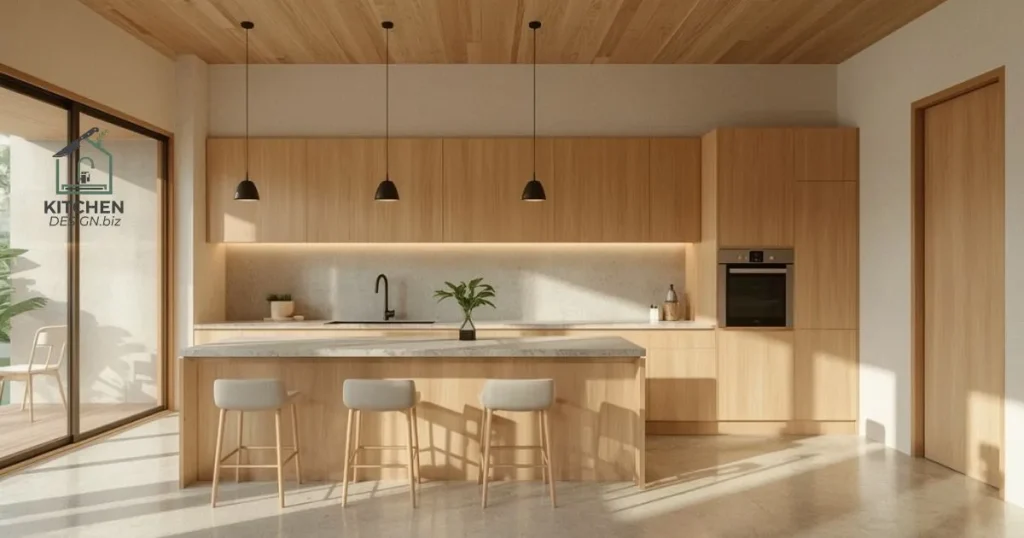
- 4. Compact Island Layout: Modern Japanese Precision
- 5. U-Shaped Layout: Focused and Highly Functional
- 6. Open-Plan Kitchen with Defined Zones
- 7. Corridor Kitchen: Smart Design for Urban Living
- 8. Zen-Inspired Minimal Layout: Philosophy Over Shape
- Materials That Define Japanese Kitchens
- Lighting: The Silent Design Tool
- Storage Rules Japanese Kitchens Follow
- Sustainability and Logic
- Final Thoughts about 8 Japanese-Style Kitchen Layouts
- FAQ
Modern life feels noisy. Because of that, many homeowners now look to Japanese design for calm, clarity, and purpose. Japanese kitchens do not chase trends. Instead, they focus on efficiency, balance, and everyday comfort.
This guide explores 8 Japanese-Style Kitchen Layouts that feel calm, practical, and modern—without unnecessary decoration or wasted space. Each layout reflects real design principles used in Japanese homes, backed by trusted architectural and interior design sources.
Why Japanese-Style Kitchens Work So Well
Japanese kitchens follow a simple logic:
If something does not serve a purpose, it does not belong.
This idea comes from Ma (negative space) and Shibui (quiet beauty). As a result, kitchens feel open, organized, and stress-free.
According to the Japan Housing Finance Agency, compact yet efficient layouts dominate modern Japanese homes due to space optimization and workflow efficiency. These ideas now influence global kitchen design trends.
1. One-Wall Layout: Maximum Calm in Minimum Space
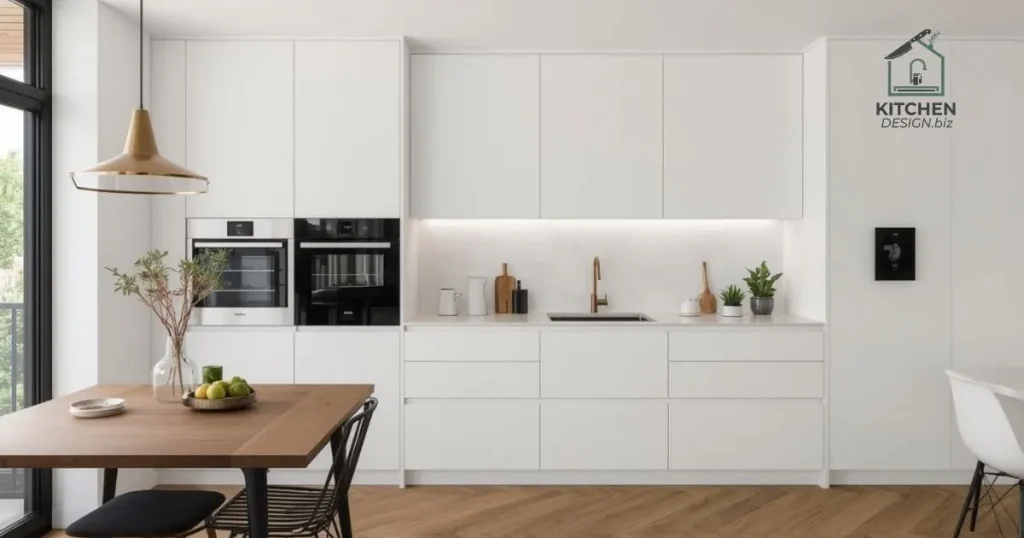
Small kitchens demand smart planning. A one-wall layout places all appliances, storage, and work zones along a single wall.
This layout works especially well in apartments and studio homes.
Why it feels calm
- No visual clutter
- Straightforward workflow
- Easy cleaning and maintenance
Japanese designers often hide appliances behind flat panels. This keeps the wall looking seamless instead of busy.
Best for: Small homes and minimalist interiors.
2. Galley Layout: Quiet Efficiency That Makes Sense
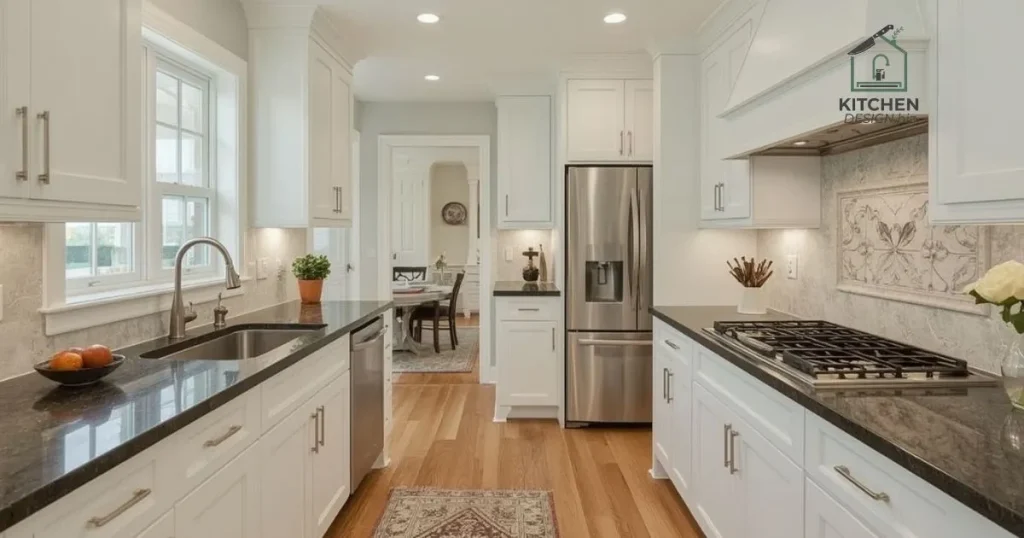
A galley kitchen uses two parallel counters. Many Japanese homes use this layout because it reduces movement and saves time.
Professional chefs also favor this layout for a reason—it works.
Why it feels practical
- Everything stays within arm’s reach
- Clear separation of tasks
- Strong focus on efficiency
Japanese kitchens usually keep one side closed and the other open. This choice prevents visual overload while maintaining airflow.
Design tip: Keep walkways at least 90 cm wide for comfort.
3. L-Shaped Layout: Balanced and Naturally Open
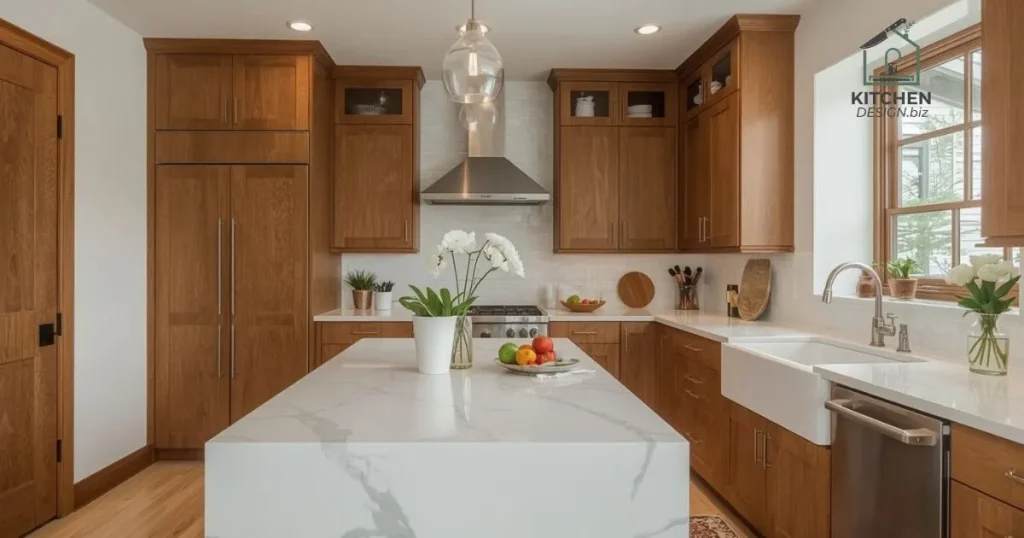
The L-shaped kitchen creates a natural corner workspace. It allows movement without blocking light or energy flow.
Japanese designers use this layout to keep kitchens functional without isolating them.
Why it feels modern
- Open sightlines
- Flexible work triangle
- Works well with dining spaces
Natural wood cabinets and soft stone countertops often complete the look.
4. Compact Island Layout: Modern Japanese Precision
Japanese kitchen islands differ from Western ones. They stay smaller, slimmer, and more intentional.
Instead of large seating areas, these islands focus on prep and light dining.
Why it feels calm
- Keeps circulation open
- Avoids overcrowding
- Adds function without noise
A slim island also improves workflow while maintaining visual balance.
5. U-Shaped Layout: Focused and Highly Functional
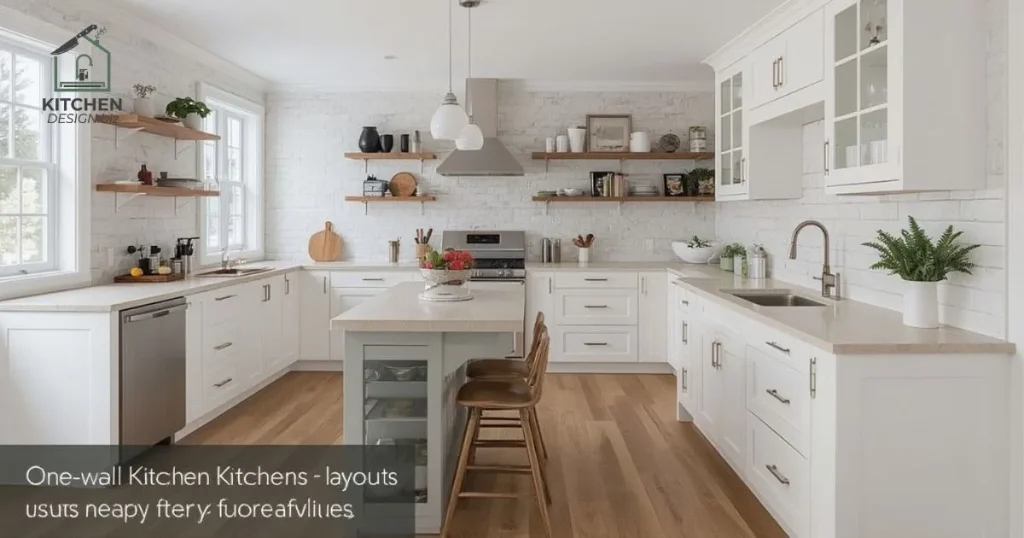
When storage matters most, Japanese designers often choose the U-shaped layout.
This design surrounds the cook with three connected work zones. As a result, everything stays close and efficient.
Why it feels practical
- Maximum storage
- Minimal steps while cooking
- Clear separation of zones
Integrated appliances keep the space visually clean.
6. Open-Plan Kitchen with Defined Zones
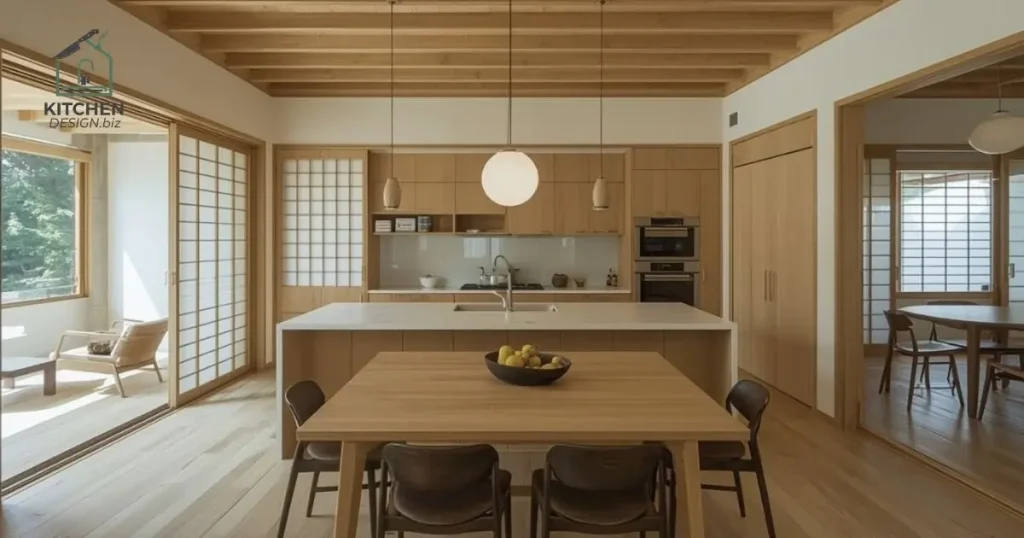
Japanese open kitchens rarely feel chaotic. Designers carefully define zones without closing spaces completely.
Sliding panels, wood slats, or subtle flooring changes create boundaries.
Why it feels calm
- Visual continuity
- Natural light flow
- Quiet separation without walls
According to ArchDaily, Japanese open-plan kitchens succeed because they respect function while protecting visual order.
7. Corridor Kitchen: Smart Design for Urban Living
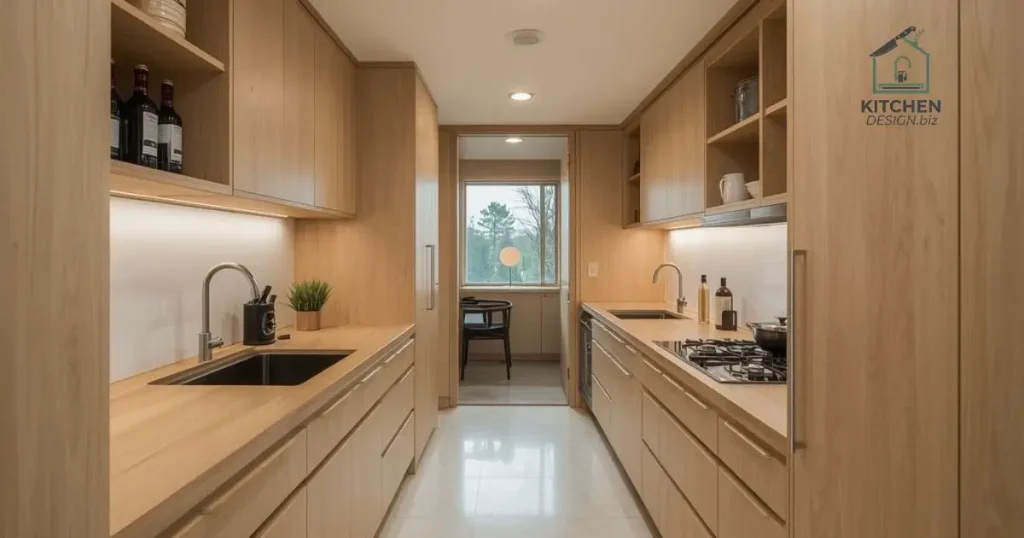
Urban Japanese homes often use corridor kitchens. These narrow layouts rely on vertical storage and hidden solutions.
Everything has a place. Nothing competes for attention.
Why it works
- Efficient vertical use
- Clean countertops
- Smooth movement flow
Push-to-open cabinets eliminate handles, which keeps surfaces visually calm.
8. Zen-Inspired Minimal Layout: Philosophy Over Shape
This layout focuses less on form and more on mindset. Zen kitchens reduce stress through simplicity and order.
Designers choose natural materials like wood, stone, and clay-based finishes.
Why it feels peaceful
- Soft lighting
- Neutral color palette
- Only essential items visible
According to The Japanese Ministry of Land, Infrastructure, Transport and Tourism, minimalist interiors support mental clarity and everyday comfort.
Materials That Define Japanese Kitchens
Japanese kitchens rely on honest materials.
- Wood: Cypress, oak, or ash
- Stone: Granite or quartz for durability
- Metal: Stainless steel for hygiene
These materials age well and require little decoration.
Lighting: The Silent Design Tool
Lighting shapes mood more than color.
Japanese kitchens use:
- Indirect LED strips
- Warm white tones
- Task lighting over counters
This approach reduces glare and visual stress.
Storage Rules Japanese Kitchens Follow
Japanese kitchens follow three rules:
- Hide clutter
- Use vertical space
- Keep counters clear
Drawer dividers and modular storage systems help maintain order.
Sustainability and Logic
Japanese kitchens prioritize sustainability.
Compact layouts reduce energy use. Durable materials limit waste. Efficient workflows save time.
According to UN Environment Programme, compact housing layouts reduce household energy consumption significantly.
Final Thoughts about 8 Japanese-Style Kitchen Layouts
Japanese kitchens prove one thing clearly:
Calm comes from clarity, not decoration.
These 8 Japanese-Style Kitchen Layouts combine logic, beauty, and purpose. They do not shout. Instead, they quietly improve everyday life.
FAQ
1. Why are Japanese kitchens so efficient?
Because they prioritize workflow, storage, and minimal movement.
2. Are Japanese-style kitchens suitable for small homes?
Yes, most layouts focus on compact and functional design.
3. Do Japanese kitchens use islands?
Yes, but they keep them slim and functional.
4. What materials define Japanese kitchen design?
Natural wood, stone, and stainless steel dominate.
5. Are Japanese kitchens modern or traditional?
They blend modern efficiency with timeless simplicity.