 Skip to content





Kitchen Renovation & Remodeling: 11 Powerful Steps for a Smart, Stress-Free Kitchen (2026)

- Kitchen Renovation & Remodeling: 11 Powerful Steps for a Smart, Stress-Free Kitchen (2026)
- Kitchen Renovation & Remodeling: Step-by-Step Planning for 2026
- Step 1: Define Your Kitchen Goals (Function Comes First)
- Step 2: Set a Realistic Kitchen Renovation Budget
- Step 3: Choose the Right Kitchen Layout (Logic Beats Trends)
- Step 4: Hire the Right Professionals (Or DIY Wisely)
- Step 5: Select Cabinets That Balance Style and Storage
- Step 6: Countertops That Match Lifestyle (Not Just Instagram)
- Step 7: Smart Appliances for Energy and Efficiency
- Step 8: Lighting That Works All Day
- Step 9: Flooring That Survives Real Life
- Step 10: Permits, Inspections, and Local Codes
- Step 11: Final Inspection and Finishing Touches
- Why Kitchen Renovation & Remodeling Builds Long-Term Value
- FAQ – Kitchen Renovation & Remodeling (One-Liners)
A kitchen renovation feels exciting—until confusion, budgets, and decisions collide. Cabinets here, appliances there, and suddenly nothing matches. That chaos happens when planning falls apart.
This Kitchen Renovation & Remodeling guide solves that problem.
You will learn exactly what to do, in the right order, using real industry standards—not Pinterest myths. This step-by-step 2026 guide follows professional design logic, modern building practices, and homeowner-approved strategies that actually work.
Let’s rebuild your kitchen the smart way.
Kitchen Renovation & Remodeling: Step-by-Step Planning for 2026
Every successful renovation starts before the first tile breaks.
Professional designers agree on one thing: planning controls cost, quality, and stress. According to the National Kitchen & Bath Association (NKBA), homeowners who plan layouts and budgets first avoid the most expensive mistakes.
Before touching anything, define your purpose.
Are you renovating for daily comfort, resale value, or energy efficiency? Each goal leads to different design choices.
Short answer: clarity saves money.
Step 1: Define Your Kitchen Goals (Function Comes First)
A beautiful kitchen that fails daily use becomes frustrating fast.
Ask yourself:
- Do you cook often or order food more?
- Do you need more storage or more counter space?
- Will children or seniors use this kitchen?
Designers call this function-first planning. NKBA guidelines prioritize workflow, safety, and accessibility before style.
Once function feels clear, design decisions become easier—and cheaper.
Step 2: Set a Realistic Kitchen Renovation Budget
Money reality matters.
Industry data from Houzz Kitchen Trends Report shows that most homeowners underestimate renovation costs by 15–25%. Smart renovators add a buffer from day one.
A balanced kitchen renovation budget usually includes:
- Cabinets: ~30%
- Labor: ~20%
- Appliances: ~15%
- Countertops: ~10%
- Flooring, lighting, extras: remaining %
Always reserve 10–15% contingency. Surprises happen behind walls. Old wiring loves drama.
Step 3: Choose the Right Kitchen Layout (Logic Beats Trends)
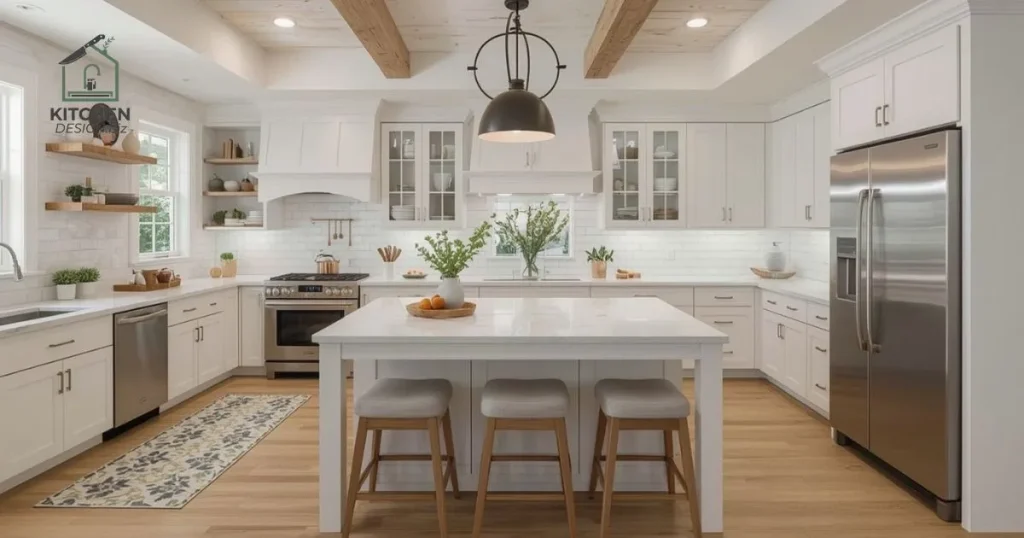
Layouts control how your kitchen feels every day.
Popular layouts in 2026 include:
- L-shaped kitchens for flexibility
- U-shaped kitchens for storage lovers
- Island kitchens for social homes
- Galley kitchens for compact efficiency
The kitchen work triangle—sink, stove, refrigerator—still matters. NKBA standards recommend clear pathways between these zones for comfort and safety.
Trends change. Movement patterns don’t.
Step 4: Hire the Right Professionals (Or DIY Wisely)
Not all renovations need a full crew. However, electrical, plumbing, and structural changes demand licensed professionals.
According to U.S. Department of Energy guidelines, incorrect appliance installation increases energy waste and safety risks.
If you DIY:
- Paint
- Hardware replacement
- Backsplash installation
If you hire:
- Plumbing
- Gas lines
- Structural walls
- Electrical upgrades
Smart hiring saves long-term costs.
Step 5: Select Cabinets That Balance Style and Storage
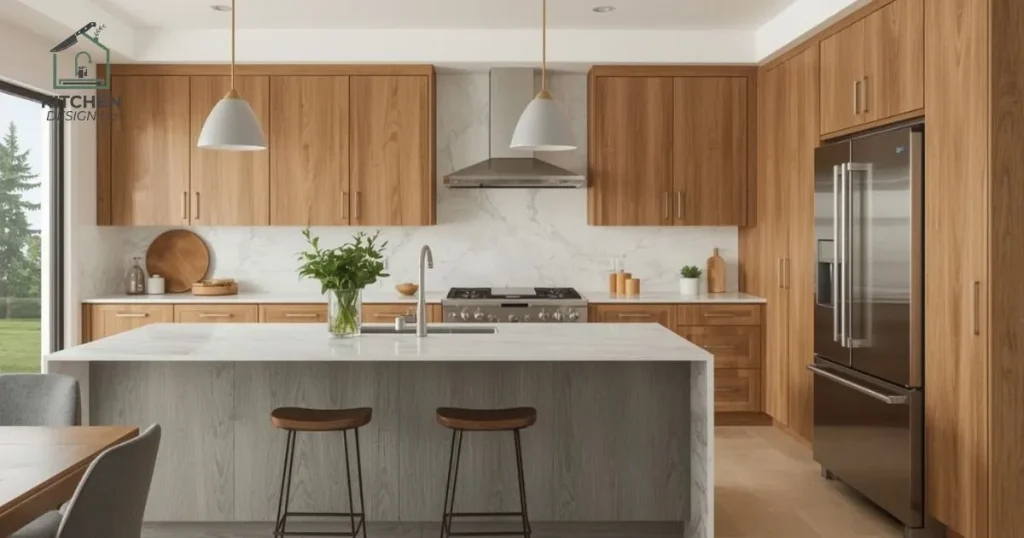
Cabinets define your kitchen’s personality.
In 2026, homeowners prefer:
- Soft-close drawers
- Full-height cabinets
- Hidden storage systems
- Matte or natural wood finishes
Avoid choosing cabinets only by looks. Interior storage design matters more than door color.
The NKBA recommends adjustable shelving and deep drawers for daily usability.
Storage frustration kills kitchen joy fast.
Step 6: Countertops That Match Lifestyle (Not Just Instagram)
Countertops work harder than any surface.
Popular materials backed by industry data:
- Quartz: durable, low maintenance
- Granite: heat-resistant, natural beauty
- Solid surface: seamless and repairable
Quartz dominates modern kitchen remodeling because it resists stains without sealing. That makes sense for busy households.
Choose material based on use—not trends.
Step 7: Smart Appliances for Energy and Efficiency
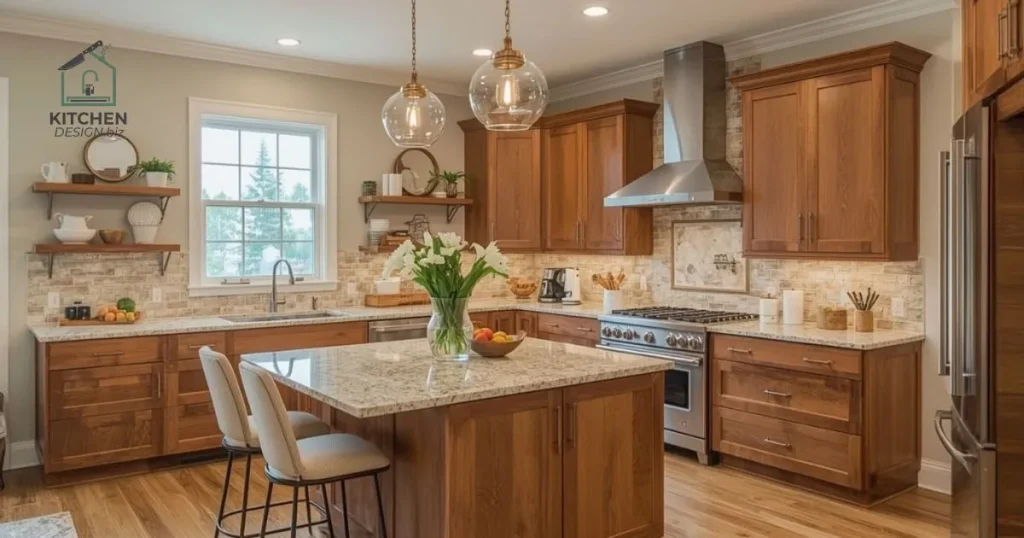
Appliances evolved fast.
According to ENERGY STAR, certified kitchen appliances reduce energy use by up to 30% compared to older models.
Key 2026 appliance trends:
- Induction cooktops
- Smart refrigerators
- Built-in ovens
- Quiet dishwashers
Focus on energy ratings, size, and daily habits. Bigger appliances don’t always improve function.
Step 8: Lighting That Works All Day
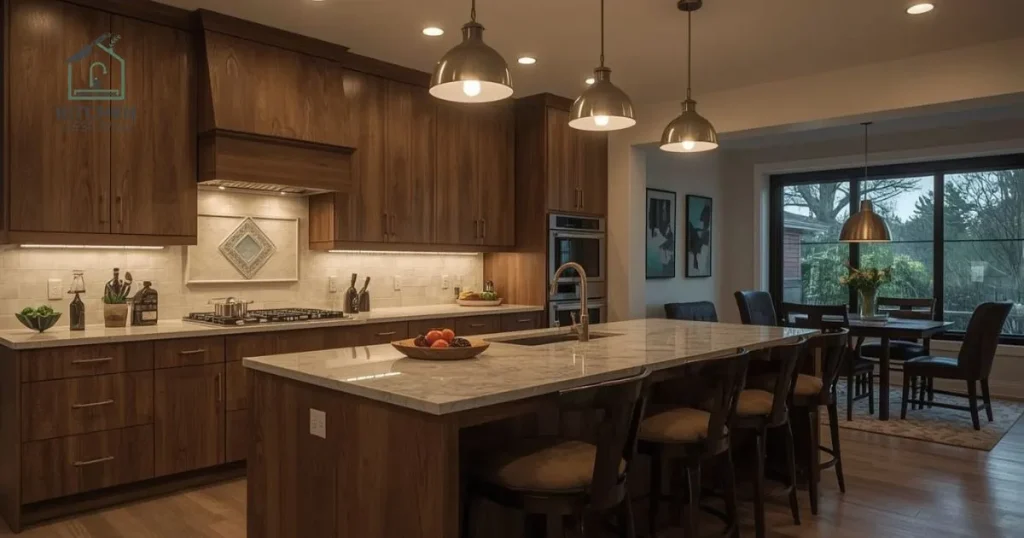
Lighting changes everything.
A functional kitchen uses three lighting layers:
- Ambient lighting for overall brightness
- Task lighting for counters and prep areas
- Accent lighting for depth and mood
LED lighting dominates because it lasts longer and consumes less power. The U.S. Department of Energy supports LED use for long-term savings.
Bad lighting ruins good design. Period.
Step 9: Flooring That Survives Real Life
Kitchen floors face heat, spills, and traffic.
Best-performing options in 2026:
- Porcelain tile
- Luxury vinyl plank (LVP)
- Engineered wood
Natural wood looks great but struggles with moisture. Designers now favor materials that balance style with durability.
Safety matters too. Slip resistance helps prevent accidents.
Step 10: Permits, Inspections, and Local Codes
Skipping permits creates expensive regrets.
Most regions require permits for:
- Electrical changes
- Plumbing updates
- Structural modifications
Local building authorities follow safety standards aligned with national regulations. Always confirm requirements before starting work.
Paperwork feels boring—until it saves you fines.
Step 11: Final Inspection and Finishing Touches
Once construction ends, inspect everything.
Check:
- Cabinet alignment
- Appliance installation
- Electrical outlets
- Plumbing connections
Finish strong with:
- Hardware upgrades
- Backsplash details
- Paint touch-ups
These small details elevate your kitchen from “new” to “polished.”
Why Kitchen Renovation & Remodeling Builds Long-Term Value
According to Remodeling Magazine’s Cost vs. Value Report, kitchen remodels consistently rank among the top home improvement investments for resale.
However, value increases only when renovations focus on quality, function, and timeless design.
Shortcuts cost more later.
FAQ – Kitchen Renovation & Remodeling (One-Liners)
1. How long does a kitchen renovation usually take?
Most kitchen renovations take 6–10 weeks, depending on scope and permits.
2. What is the biggest mistake in kitchen remodeling?
Skipping proper planning causes budget overruns and layout problems.
3. Are kitchen renovations worth it in 2026?
Yes, kitchens still deliver strong lifestyle and resale value.
4. Should I renovate my kitchen before selling?
Minor upgrades often deliver better ROI than full remodels.
5. What adds the most value to a kitchen renovation?
Functional layout, quality cabinets, and energy-efficient appliances.