 Skip to content



10 Small Kitchen Layout Ideas That Make Your Space Feel Bigger
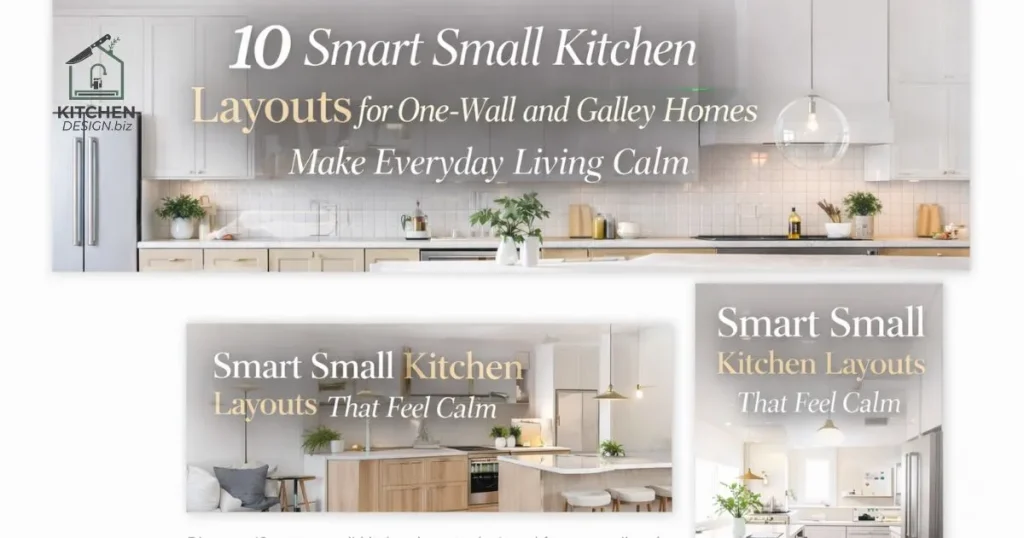
10 Small Kitchen Layout ideas test patience. Limited space, tight movement, and cluttered counters often turn daily cooking into a chore. However, the right layout can completely change that experience.
According to the National Kitchen & Bath Association (NKBA), layout efficiency matters more than square footage in compact kitchens. Smart planning improves movement, lighting flow, and visual openness—three factors that directly affect how large a kitchen feels.
This guide explores 10 small kitchen layouts designed specifically for one-wall and galley homes, with a focus on calm, functional everyday living.
1. One-Wall Kitchen Layouts That Keep Daily Tasks Effortless
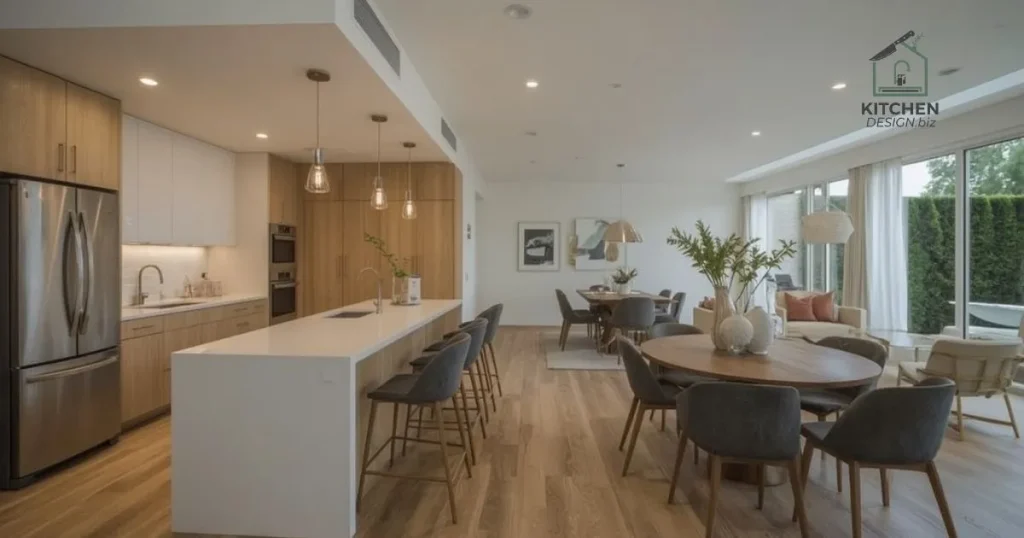
One-wall kitchens work best when everything stays within easy reach.
By placing appliances, sink, and prep areas along a single wall, this layout eliminates unnecessary movement. NKBA workflow guidelines confirm that reduced steps improve efficiency and comfort in small kitchens.
To avoid a flat or dull look, designers often mix closed cabinets with open shelving. This balance maintains storage while keeping the space visually light.
Why it works:
Clear lines, zero obstacles, and uninterrupted floor space make the kitchen feel instantly bigger.
2. Galley Kitchen Layouts Designed With Balanced Cabinet Depths
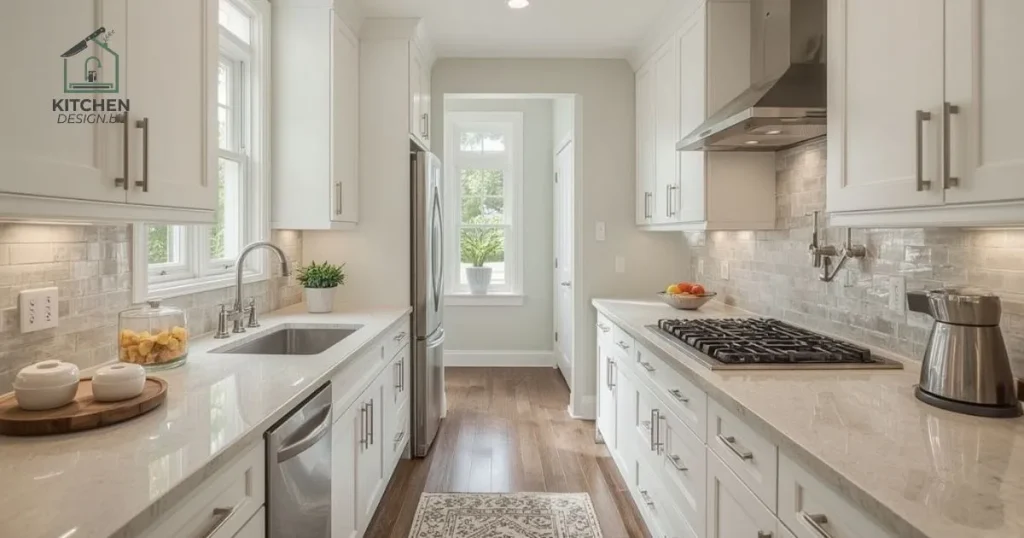
Galley kitchens succeed or fail based on proportions.
A well-designed galley layout uses balanced cabinet depths to maintain comfortable clearance. NKBA recommends at least 42 inches between opposing counters in single-cook kitchens.
Shallower cabinets on one side help prevent crowding while preserving storage. Light-colored finishes and reflective backsplashes further enhance openness.
Key logic:
When movement feels natural, space feels generous
3. Smart Working Triangle Planning for Small Kitchen Layouts
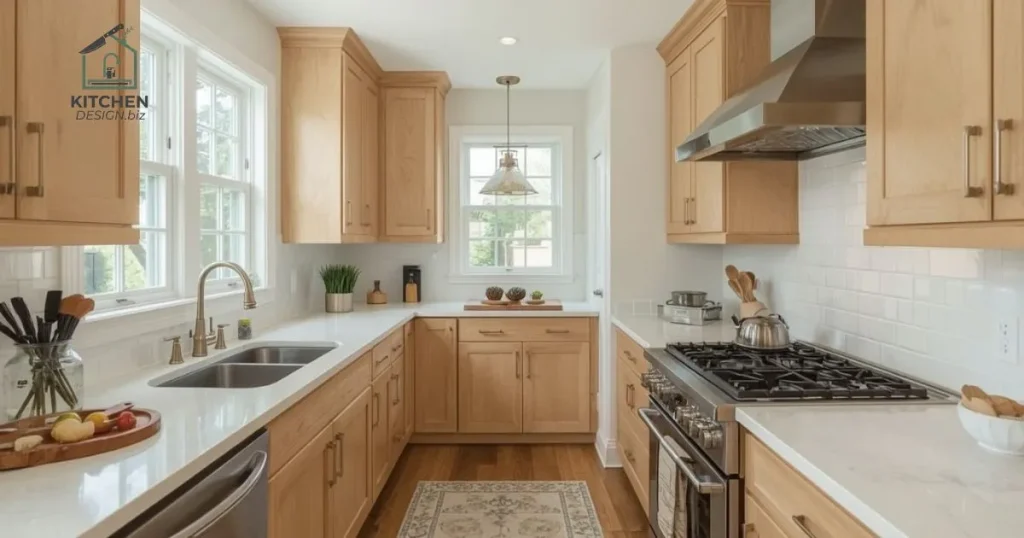
The working triangle still matters—especially in small kitchens.
This layout principle connects the sink, cooktop, and refrigerator in a tight, efficient loop. According to NKBA planning standards, compact triangles reduce fatigue and improve task flow.
In one-wall kitchens, the triangle becomes linear. In galley layouts, it forms a compact loop across parallel counters.
Result:
Less walking, less frustration, more calm.
4. Using Tall Storage Strategically Without Overcrowding the Space
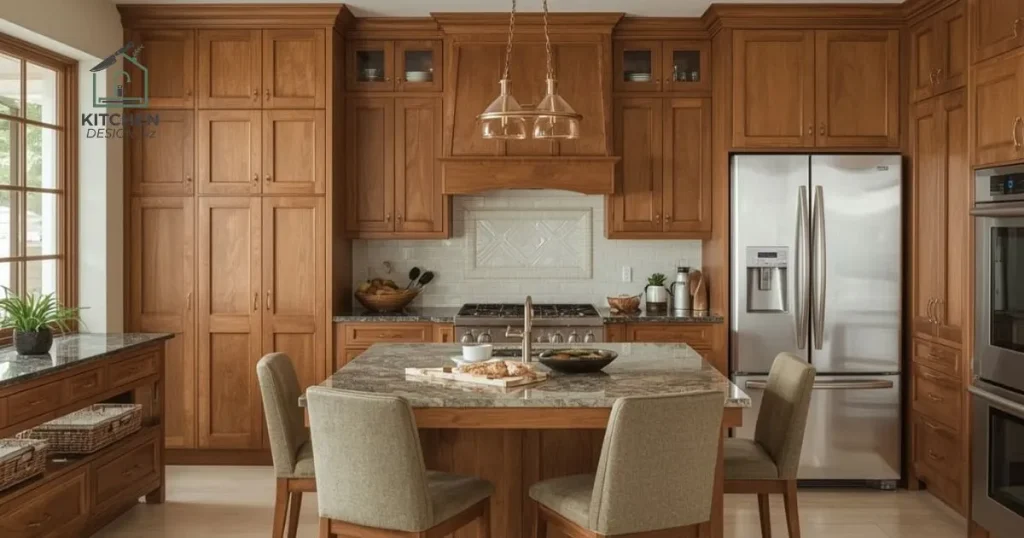
Tall cabinets solve storage problems—but only when used wisely.
Instead of spreading height across every wall, designers concentrate tall storage at one end. This approach preserves visual openness while maximizing capacity.
Research highlighted by Houzz Kitchen Trends shows that vertical storage reduces countertop clutter, which directly improves perceived space.
Design truth:
Clutter shrinks rooms faster than walls ever could.
5. Open Layout Elements That Reduce Visual Clutter
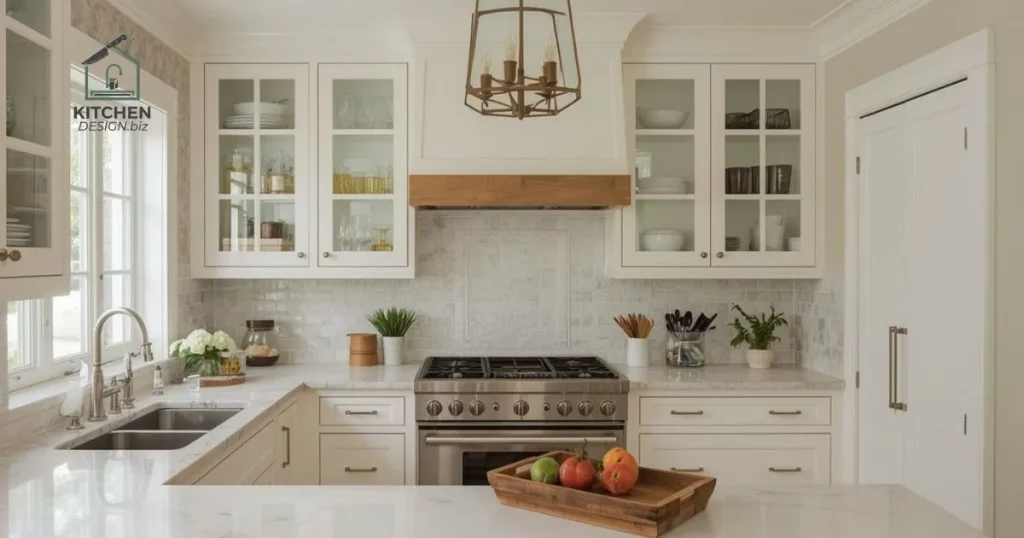
Open sections bring breathing room into tight kitchens.
Glass-front cabinets, open shelving, or appliance garages break up solid cabinetry blocks. These elements reduce visual weight without sacrificing function.
Architectural Digest frequently highlights open design elements as a key strategy for small-space kitchens because they allow the eye to move freely.
Simple rule:
If the eye can travel, the room feels larger.
6. Modular Kitchen Cabinets Built to Fit Compact Spaces Perfectly
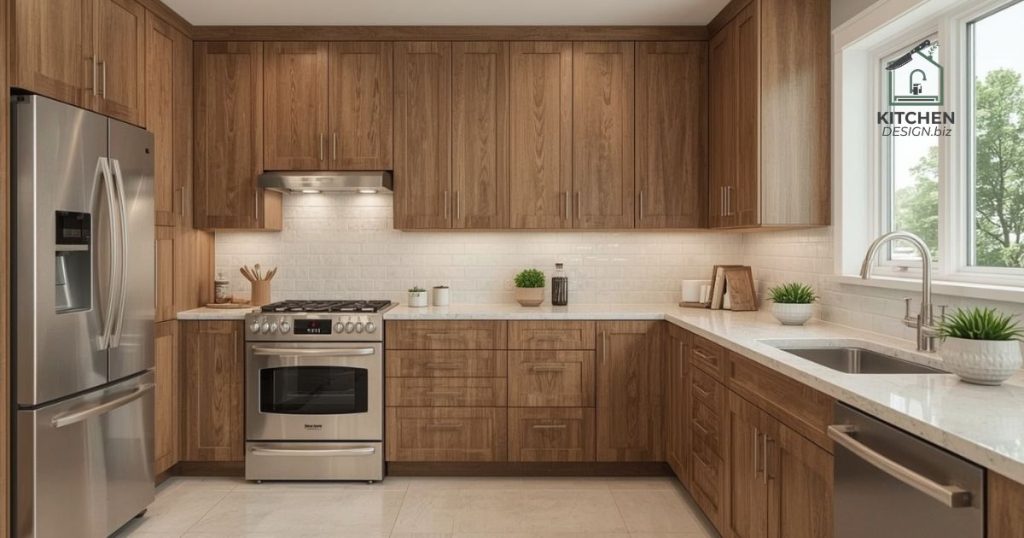
Modular cabinetry gives small kitchens a serious advantage.
Unlike standard cabinets, modular systems adapt to exact dimensions. This precision eliminates awkward gaps and wasted corners.
According to NKBA design principles, better fit equals better workflow. Modular cabinets also allow future upgrades without full renovation.
Human benefit:
The kitchen works for you—not against you.
7. Streamlined Appliance Placement for Better Movement Flow
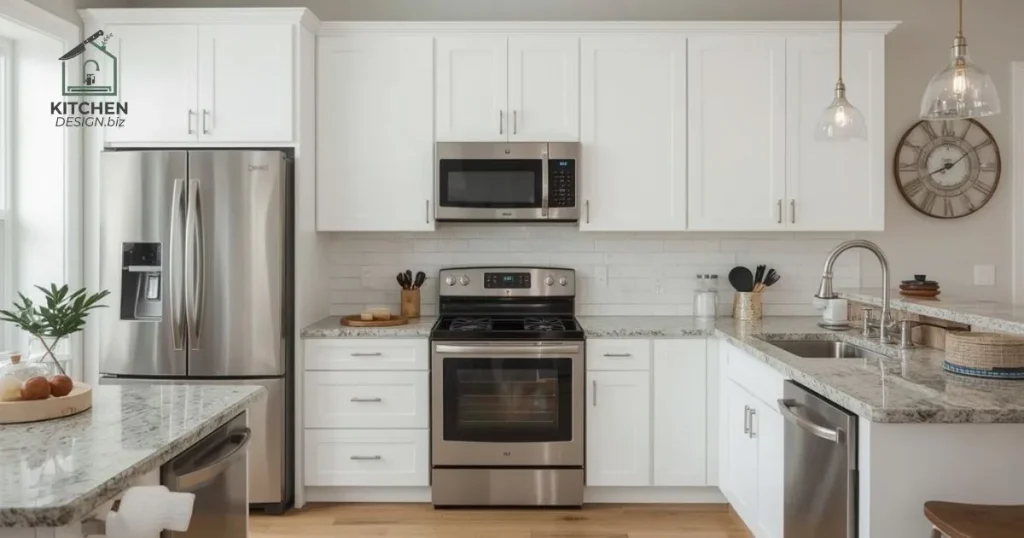
Appliances often disrupt small kitchens more than cabinets.
Smart layouts group appliances logically while keeping doors and drawers from colliding. Slim appliances, panel-ready designs, and built-in units preserve flow without sacrificing performance.
Energy-efficient compact appliances recommended by the U.S. Department of Energy also reduce heat buildup, which improves comfort in small spaces.
Practical win:
Less obstruction, smoother movement, calmer cooking.
8. Continuous Countertop Layouts That Improve Kitchen Efficiency
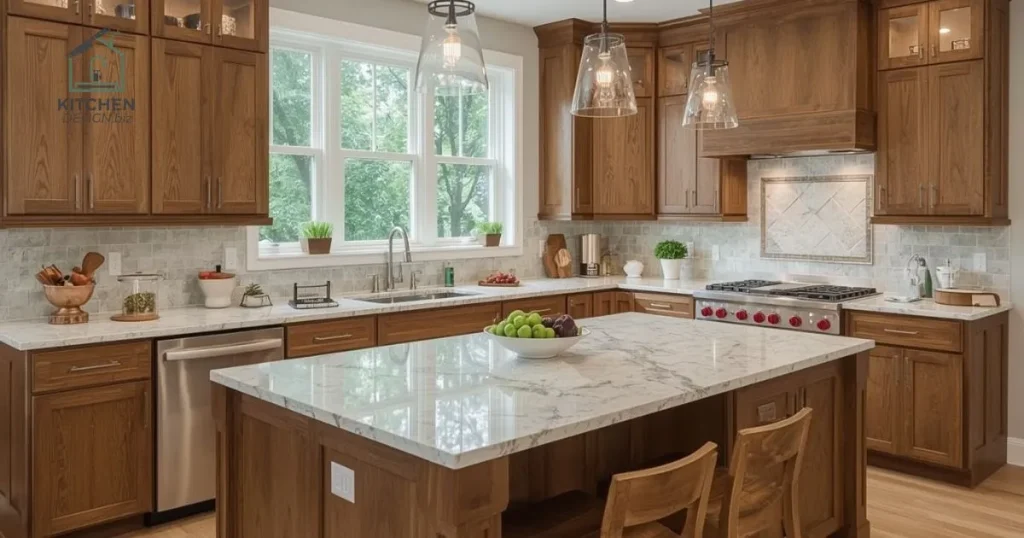
Broken countertops create visual and functional interruptions.
Continuous countertops support smoother prep zones and reduce cluttered seams. In small kitchens, uninterrupted surfaces also enhance perceived width.
Design experts agree that fewer breaks help the kitchen feel cohesive rather than cramped.
Efficiency boost:
More usable space without adding inches.
9. Lighting Choices That Make Small Kitchens Feel Larger
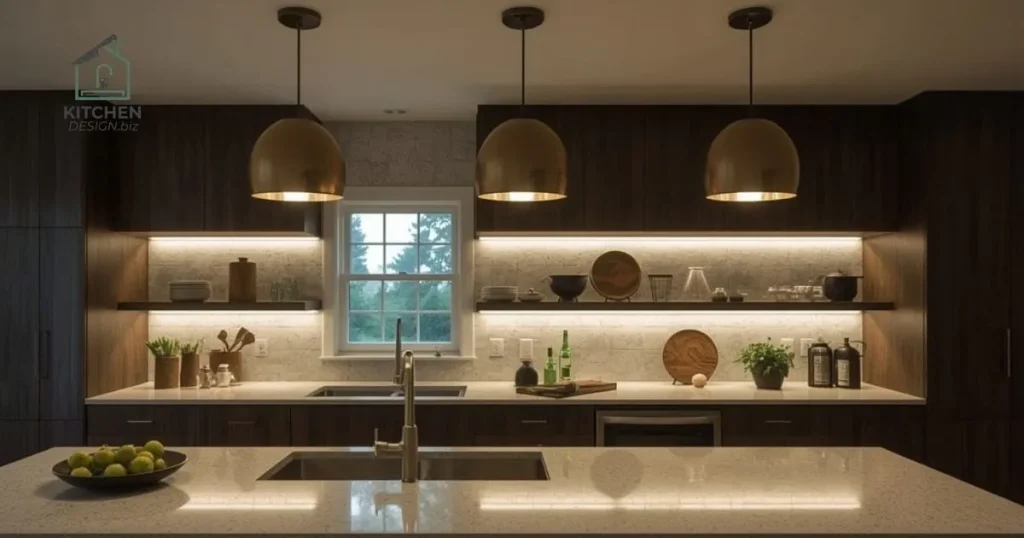
Lighting changes everything.
Layered lighting—ambient, task, and accent—expands perceived space by eliminating shadows. According to the Lighting Research Center, even light distribution improves comfort and spatial clarity.
Under-cabinet lighting brightens work zones, while ceiling fixtures open vertical space.
Design logic:
Dark corners shrink rooms. Light removes limits.
10. Simple, Timeless Finishes That Work Long-Term
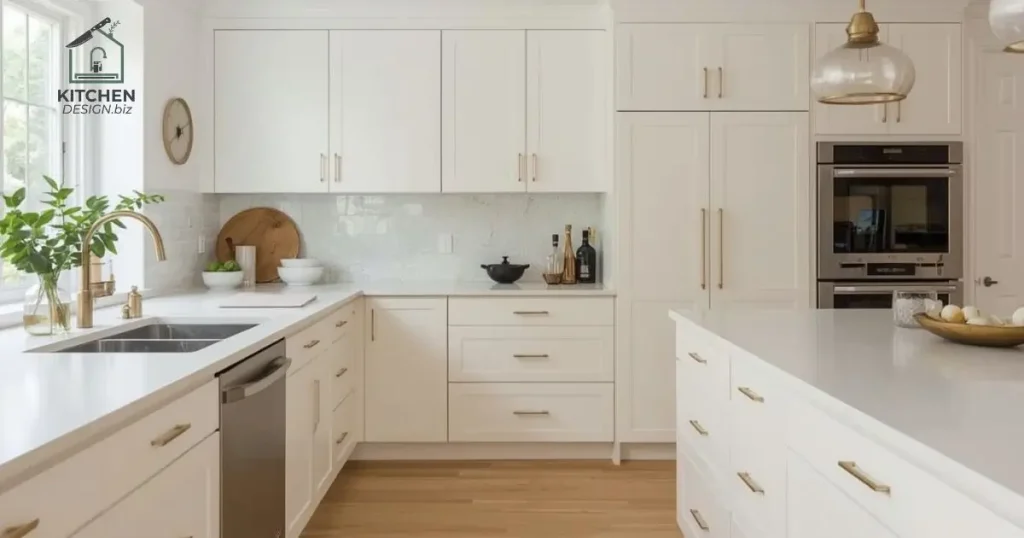
Trendy finishes date fast. Simple finishes last.
Neutral cabinetry, matte hardware, and soft textures age well and adapt easily. Houzz trend data consistently shows homeowners prefer finishes that remain flexible over time.
These finishes also reflect light better, helping small kitchens stay bright and open.
Final takeaway:
Timeless design creates long-term calm.
Final Thoughts: Calm Comes From 10 Small Kitchen Layout Ideas
Small kitchens layout’s don’t need dramatic upgrades. They need thoughtful planning.
The right layout improves flow, reduces friction, and supports daily routines. When space works logically, calm follows naturally.
Design isn’t about size.
It’s about how well a space supports real life.
FAQ
What is the best kitchen layout for very small spaces?
The one-wall kitchen layout works best for very small spaces because it keeps all functions in one line and leaves more open floor area.
Do galley kitchens work well in small homes?
Yes, galley kitchens are ideal for small homes because they use parallel walls efficiently and create a smooth, compact workflow.
How can a small kitchen layout make the space feel bigger?
A smart small kitchen layout improves lighting, reduces clutter, and enhances movement flow, which makes the space feel larger and more comfortable.