8 Small Kitchen Layout Ideas That Make Your Space Feel Bigger
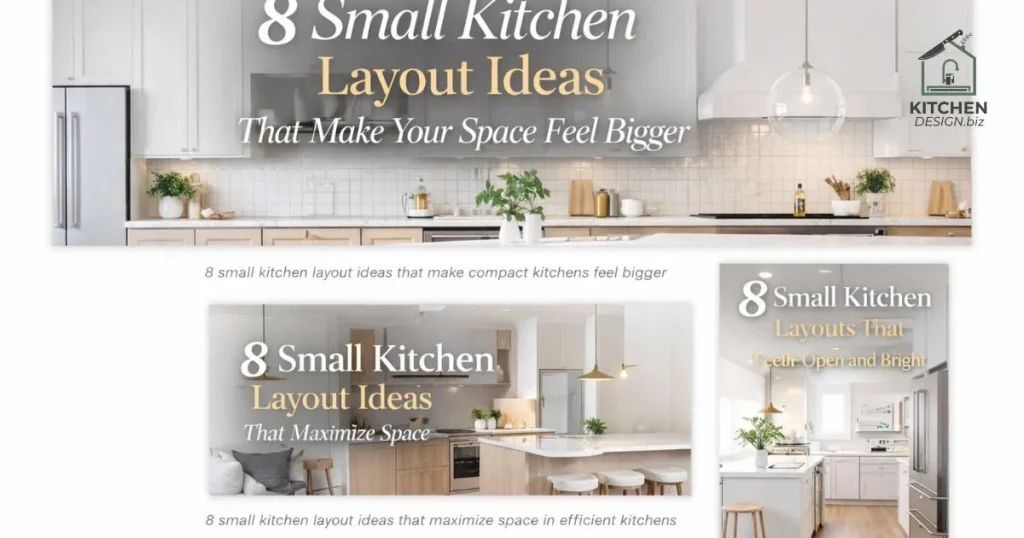
Small kitchens have a reputation problem. People assume limited space means limited comfort, limited storage, and limited joy. That assumption is wrong.
In reality, layout—not size—decides how big a kitchen feels. Design research from Houzz, Architectural Digest, and the National Kitchen & Bath Association (NKBA) confirms this: smart layouts improve movement, lighting flow, and perceived space far more than square footage ever could.
This guide shares 8 small kitchen layout ideas that genuinely make compact kitchens feel larger, brighter, and easier to use—without relying on gimmicks or unrealistic design trends.
Why Layout Matters More Than Size in Small Kitchens
Before jumping into ideas, one truth matters.
A poorly planned large kitchen feels cramped.
A well-planned small kitchen feels efficient and open.
According to NKBA kitchen planning guidelines, clear pathways, work triangle efficiency, and visual openness directly affect how spacious a kitchen feels. Layout controls all three.
Now, let’s break down the layouts that actually work.
1. One-Wall Layout: The Ultimate Space Saver
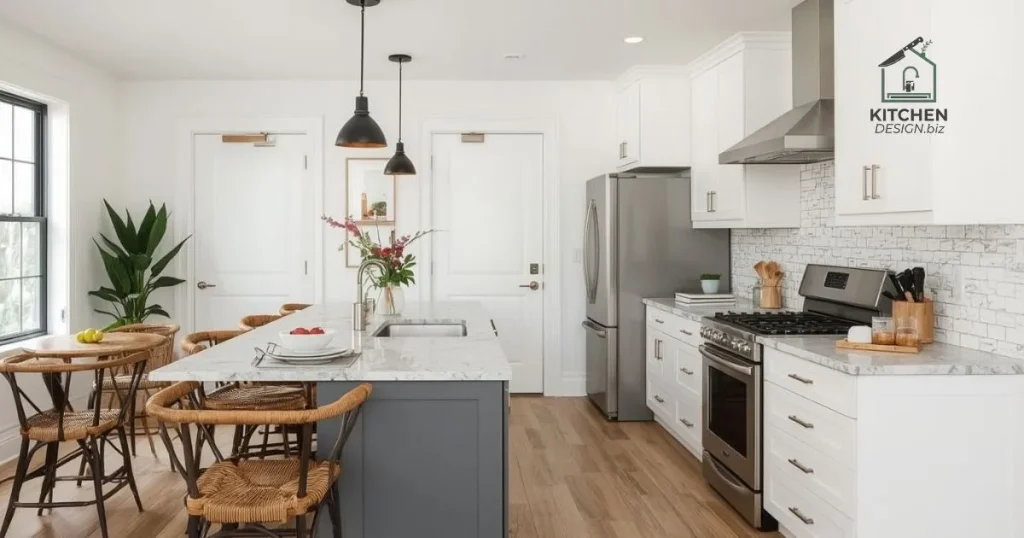
The one-wall kitchen layout places all appliances, cabinets, and countertops along a single wall.
This layout works exceptionally well in apartments, studio homes, and narrow spaces. By eliminating corners and cross-traffic, the kitchen instantly feels more open.
Designers often pair this layout with open shelving or tall cabinets to maximize vertical storage without cluttering the floor area.
Why it feels bigger:
No visual breaks. No blocked walkways. Just clean lines and open space.
2. Galley Layout With Smart Clearance
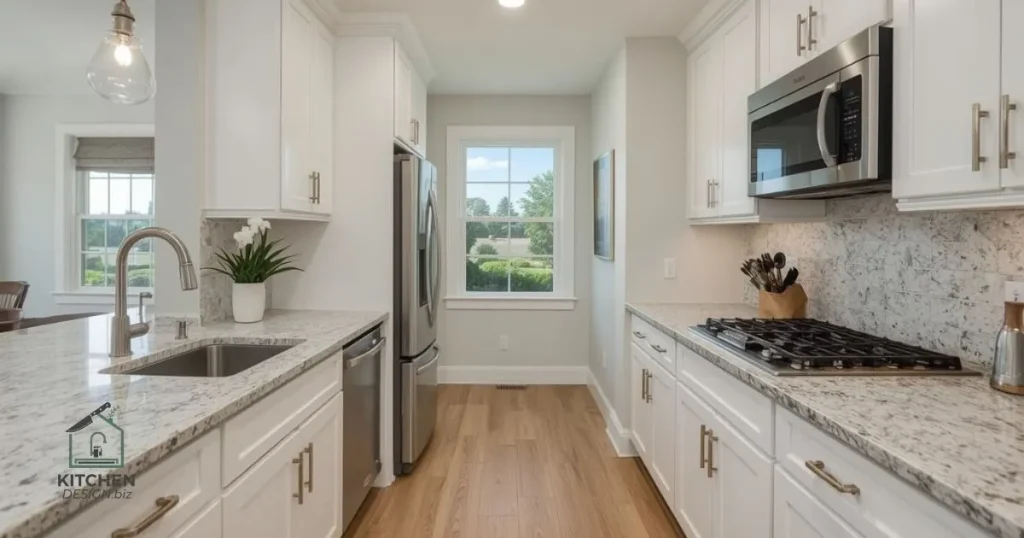
Galley kitchens get a bad reputation—but only when designed poorly.
A well-planned galley layout keeps parallel counters at least 42 inches apart, as recommended by NKBA standards. This spacing prevents the “hallway effect” and allows two people to move comfortably.
Using lighter cabinet colors and reflective backsplashes further enhances openness.
Logic check:
Efficient layouts feel larger because movement feels effortless.
3. L-Shaped Layout That Opens the Room
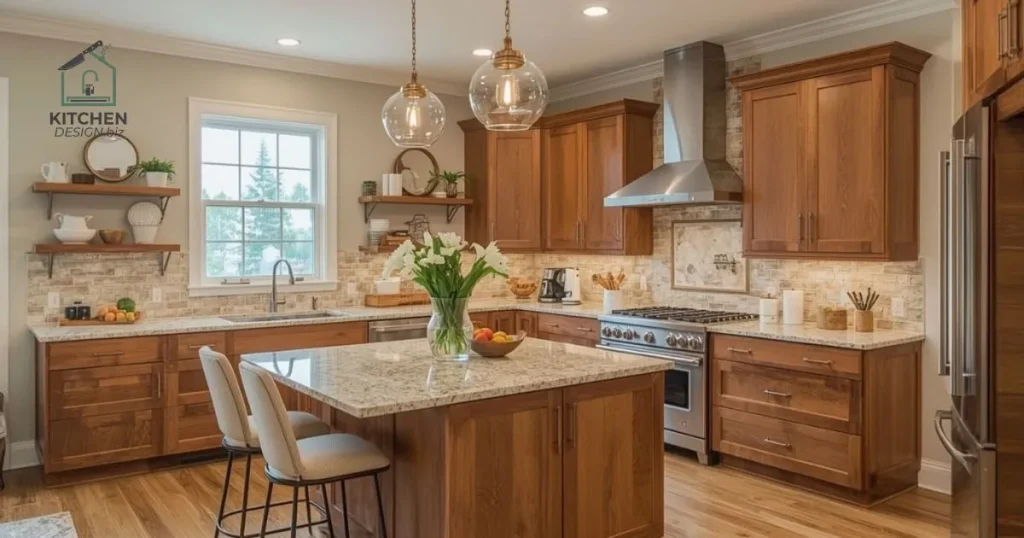
The L-shaped layout remains one of the most popular small kitchen layouts—and for good reason.
By using two adjoining walls, this layout opens the remaining space for better movement and light flow. It also creates a natural zone for dining or storage without adding walls.
Interior design studies highlighted by Houzz Kitchen Trends show L-shaped layouts consistently rank high for small homes.
Bonus benefit:
Corners become storage heroes when fitted with lazy Susans or pull-out units.
4. Open-Concept Small Kitchen Layout
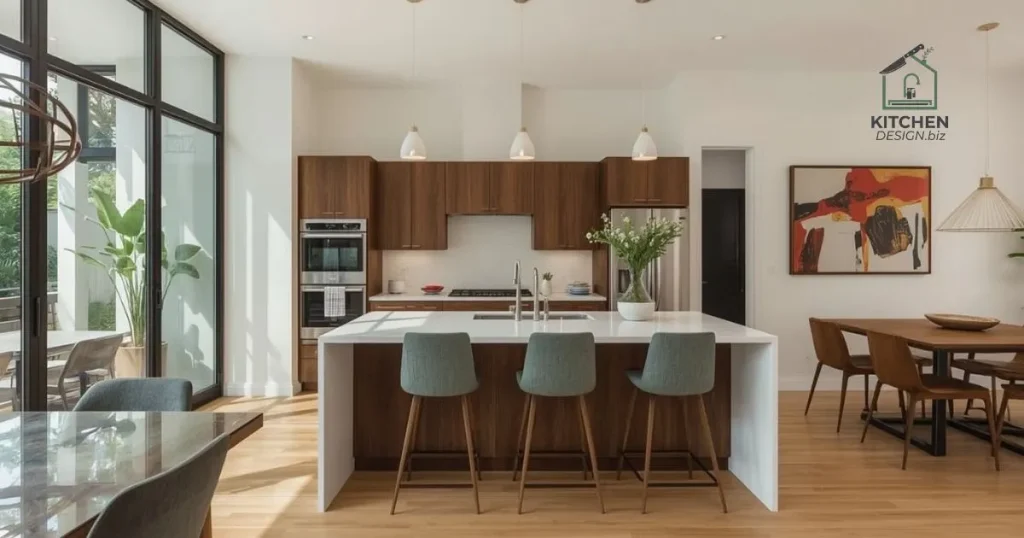
An open-concept kitchen layout removes visual barriers between the kitchen and living or dining areas. Even a partial opening, like a half wall or pass-through, makes a noticeable difference.
According to Architectural Digest, open layouts increase natural light penetration and reduce visual congestion—two key factors in making spaces feel larger.
Important note:
Good zoning matters. Lighting and flooring should subtly define the kitchen area.
5. Peninsula Layout Instead of an Island
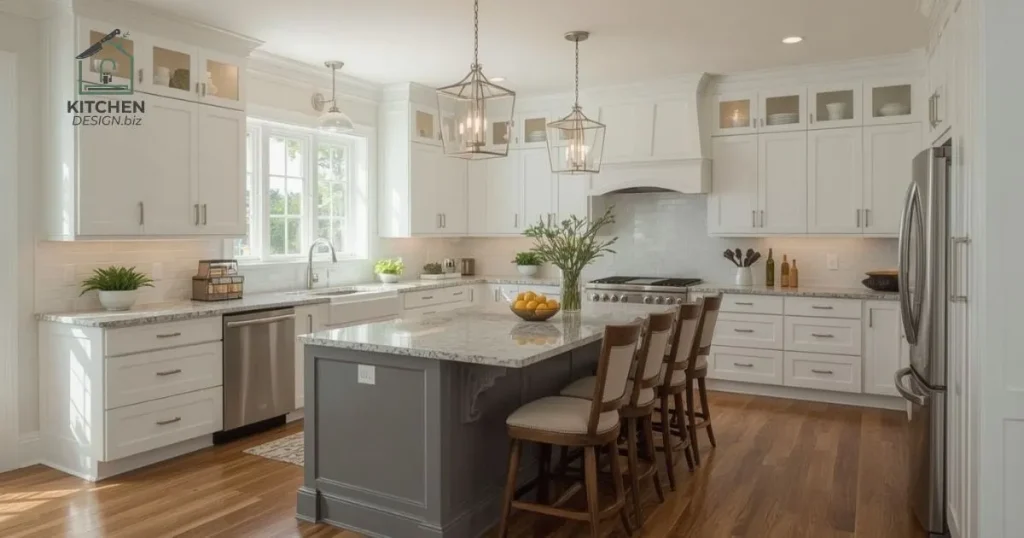
Islands look great on Pinterest. Peninsulas work better in real small kitchens.
A peninsula layout offers the functionality of an island while remaining connected to existing cabinetry. This layout adds counter space, seating, and storage without blocking movement.
Design professionals often recommend peninsulas for kitchens under 150 square feet.
Why it works:
You gain function without sacrificing flow.
6. U-Shaped Layout With Open Ends
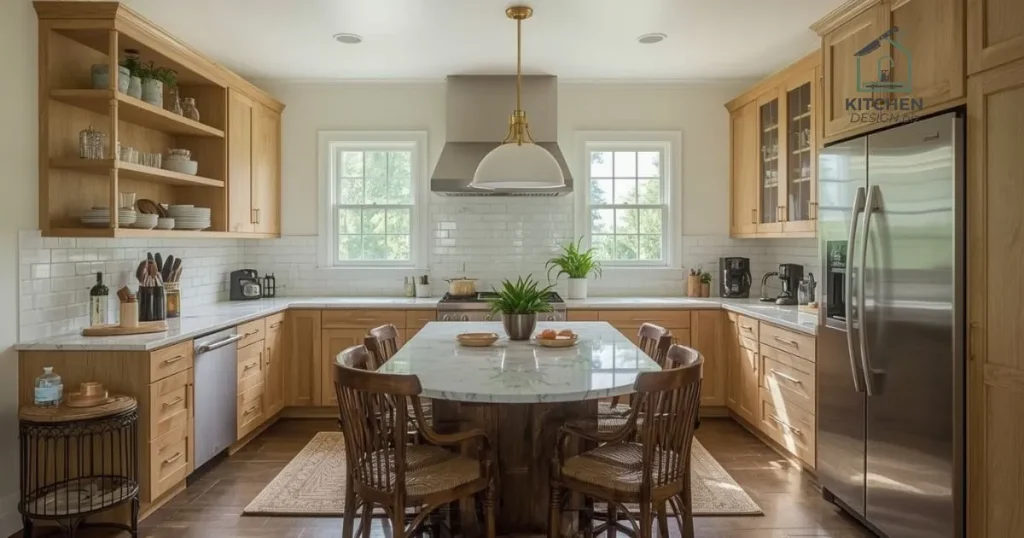
A U-shaped kitchen layout can work in small spaces—if designed correctly.
The trick lies in keeping one end open or visually light. Open shelving, glass cabinets, or a window at the base of the “U” prevents the boxed-in feeling.
Research shared by the Lighting Research Center shows that visual depth and light access significantly affect perceived room size.
Design logic:
The eye needs somewhere to travel. Give it an exit.
7. Vertical-Focused Layout for Storage Without Bulk
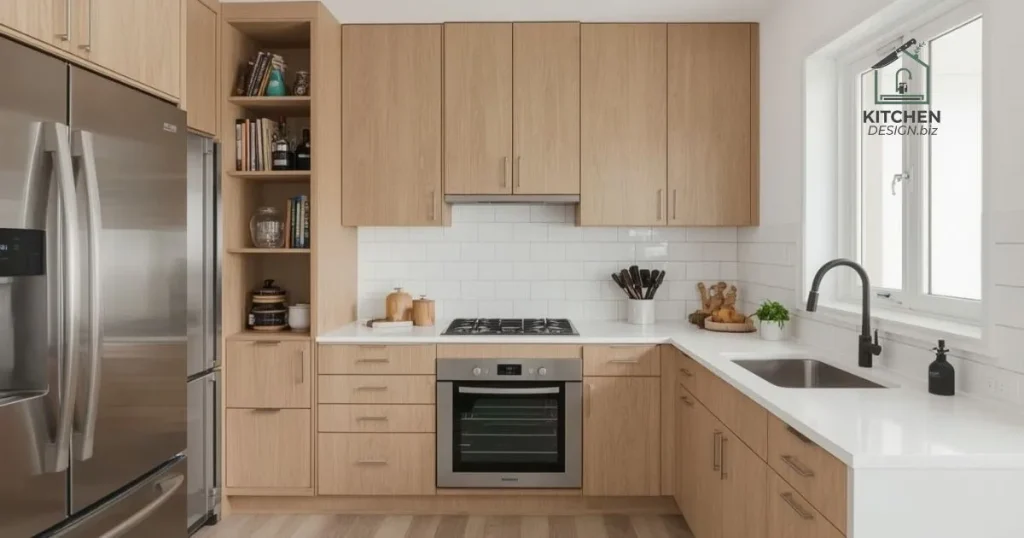
Small kitchens often lack storage—but horizontal expansion isn’t the solution.
A vertical-focused kitchen layout uses tall cabinets, ceiling-height storage, and slim appliances. This approach keeps the floor area clear while increasing capacity.
Designers from Houzz emphasize that vertical storage reduces clutter, which directly improves how spacious a room feels.
Human truth:
Less clutter equals less mental stress.
8. Minimalist Layout With Clear Work Zones
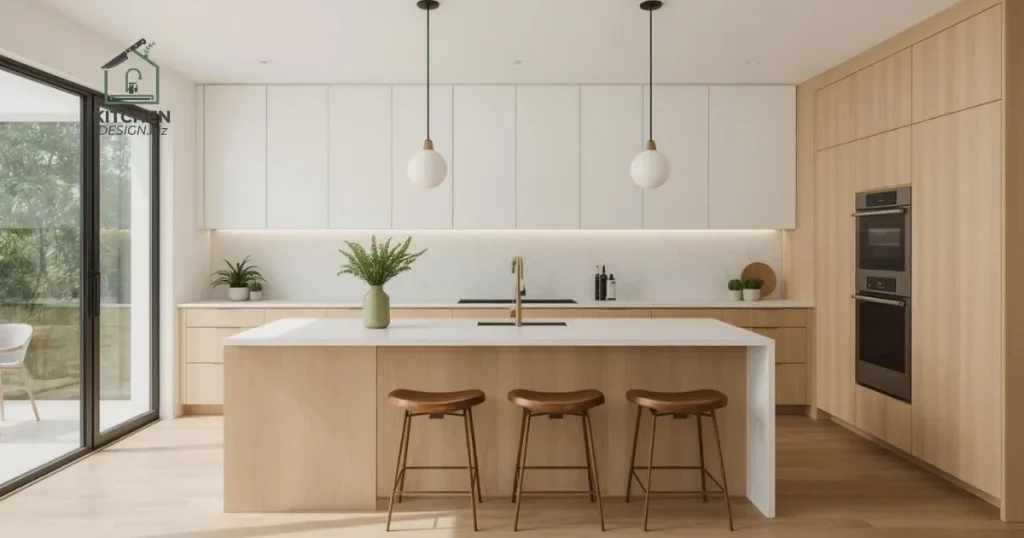
Sometimes, the best layout removes more than it adds.
A minimalist kitchen layout focuses on clear work zones—prep, cook, clean—without unnecessary cabinetry or decorative breaks. This approach aligns with NKBA workflow principles.
Fewer visual elements allow the kitchen to breathe, even in tight spaces.
Final takeaway:
Space feels bigger when design stops fighting itself.
Common Mistakes That Make Small Kitchens Feel Smaller
Even good layouts fail when paired with bad decisions.
Avoid these common mistakes:
- Oversized appliances
- Dark, matte finishes everywhere
- Blocking natural light
- Poor lighting placement
Each one shrinks perceived space instantly.
How to Choose the Right Layout for Your Kitchen
Before committing to any of these 8 small kitchen layout ideas, ask three questions:
- How many people use the kitchen daily?
- Where does natural light enter?
- Which tasks happen most often?
Your answers will guide the right layout—not trends.
Final Thoughts: 8 Small Kitchen Layout Ideas Can Feel Surprisingly Big
A small kitchen doesn’t need magic. It needs logic.
8 Small Kitchen Layout Ideas improve flow, reduce friction, and open visual space. When you choose the right one, your kitchen stops feeling small—and starts feeling intentional.
Design isn’t about size.
It’s about how space works for real people.
FAQs
What is the best layout for a small kitchen?
One-wall and L-shaped layouts work best for most small kitchens.
Do open kitchens feel bigger?
Yes, open layouts improve light flow and reduce visual barriers.
Are galley kitchens good for small spaces?
Yes, when designed with proper clearance and lighting.
Is an island suitable for a small kitchen?
Usually no; a peninsula works better in limited space.
How can layout make a kitchen feel bigger?
Good layouts improve movement, reduce clutter, and enhance visual depth.