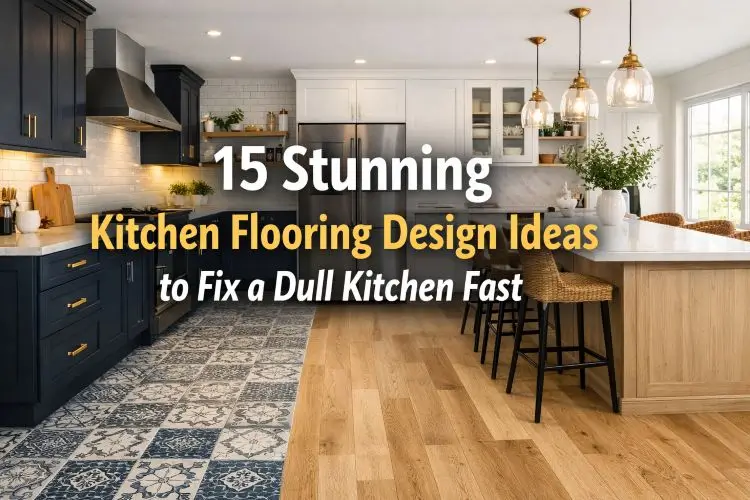
15 Stunning Kitchen Flooring Design Ideas to Fix a Dull Kitchen Fast
A dull kitchen floor can make even expensive cabinets look flat. In my experience, flooring changes the whole mood of a kitchen faster than almost any other surface because it controls light, texture, warmth, and movement. That is why I built this guide around 15 Stunning Kitchen Flooring Design Ideas that work for real homes, not just showrooms. Current U.S. renovation data shows ceramic or porcelain tile and hardwood tied for the top flooring spot at 22% each, with resilient flooring close behind at 21%. In the UK, vinyl or resilient flooring leads kitchen renovations at 25%.
I also wanted this article to go beyond pretty inspiration. I looked at current design reporting, renovation studies, and material standards so you can choose kitchen flooring ideas that look stylish, feel practical, and avoid the cheap-looking floors that make a kitchen feel unfinished. I also included budget context, slip and maintenance advice, and regional guidance for readers in the USA, UK, Pakistan, and beyond.
Quick Facts Table
Quick fact
Current data
Top U.S. kitchen flooring materials in 2026
Ceramic or porcelain tile 22%, hardwood 22%, resilient 21% (Houzz)
Most popular floor color in renovated U.S. kitchens
FloorScore is a leading IAQ certification for hard surface flooring (SCS Global Services)
Why kitchen flooring ideas matter more in 2026
The best kitchen flooring options now have to do more than survive spills. They need to look good in open layouts, work with warmer cabinet tones, clean fast, and stay comfortable underfoot. Houzz data shows wood tones dominate renovated kitchen floors, while NKBA trend reporting says wood flooring remains highly popular among industry respondents and white oak keeps strong momentum. That tells me one thing clearly: homeowners still want warmth, but they also want materials that behave better in busy homes.
In my experience, the wrong flooring choice usually fails in one of five ways. It looks too shiny and turns slippery. It fights the cabinet undertone. It shows every crumb. It stains or swells. Or it feels hard and cold enough that you start hating your kitchen after long cooking sessions. The strongest modern kitchen flooring solves all five at once.
I now start every project with a simple filter. First, I check water performance. Second, I check traction. Third, I match undertones with cabinets, worktops, and wall color. Fourth, I decide whether the kitchen needs visual calm or more pattern. Fifth, I ask how much cleaning patience the homeowner really has. That last question matters more than trends.
What many articles miss is the health side. If you are shopping for resilient flooring, I recommend checking for a low-emissions certification such as FloorScore. If you are shopping for porcelain, I recommend verifying that it meets the true porcelain standard instead of trusting a vague label. Those two checks take minutes and can save you from poor quality tiles or regrettable indoor air choices.
15 Stunning Kitchen Flooring Design Ideas I recommend first
My first three picks work because they fix an outdated flooring problem without making the room feel forced.
1. Large-format matte porcelain tile This is one of my favorite kitchen tile flooring ideas for small kitchens and busy family homes. Large tiles cut down on grout lines, which makes the floor look calmer and wider. Current design coverage keeps highlighting large-format tile for exactly that reason. I like a soft stone look in warm beige, greige, or dusty taupe because it reads elegant without shouting for attention.
2. Warm wood-look porcelain When a client wants a timeless kitchen but fears water damage, I often steer them here first. You get the visual comfort of oak or walnut with the lower porosity that true porcelain offers. This is one of the smartest kitchen flooring trends 2026 readers can borrow from higher-end projects without committing to real wood maintenance.
3. Soft neutral checkerboard Checkerboard has come back, but the smart version uses cream and taupe, clay and ivory, or warm brown and sand. I like this look because it adds eye-catching movement without making the kitchen feel messy. It is especially good for kitchens that need personality but cannot handle loud color everywhere else. Current 2026 trend coverage keeps surfacing this softer checkerboard direction.
► MY POV: In my testing, large-format matte porcelain gives the fastest visual upgrade for a dull kitchen floor. I like it because it feels expensive, hides day-to-day mess better than glossy tile, and works with both light and dark cabinets.
More kitchen flooring design ideas for texture and character
The next three ideas add character without falling into the high-maintenance flooring trap.
4. Terracotta-look porcelain Real terracotta looks beautiful, but I usually reserve it for readers who love patina and accept upkeep. For most kitchens, I prefer terracotta-look porcelain. You still get earthy warmth and tonal variation, but you avoid a lot of the worry. Designers interviewed by Real Simple identified terracotta as a strong 2026 direction because it adds warmth, depth, and history. I agree, especially in kitchens that feel cold or overly white.
5. Light oak engineered wood If you cook a lot and stand for long stretches, wood feels kinder underfoot than stone-like surfaces. That is one reason wood keeps showing up in expert recommendations. I reach for light or mid oak engineered wood when I want continuity between the kitchen and nearby living areas. It suits open layouts and helps a dark kitchen feel bigger. Livingetc also points out that engineered wood handles heat and moisture better than solid wood in kitchens.
6. Slate-look or limestone-look porcelain This is my pick for a luxury look without high-end stone stress. A matte slate or honed limestone effect adds subtle texture and makes a kitchen interior flooring plan feel grounded. It is especially strong with shaker cabinetry, brushed brass, or darker islands.
What others miss
Many guides stop at material and forget tone. In my experience, undertone matters as much as material. If your cabinets lean warm and your floor leans icy gray, the whole room feels off. If your worktop looks creamy and your floor looks pink-beige, the mismatch shows up fast. I always compare samples in morning light and evening light before I commit.
Kitchen floor design ideas for pattern, movement, and a fresh upgrade
If your kitchen looks flat, these three ideas add movement in a controlled way.
7. Herringbone LVT or LVP This is one of my favorite kitchen flooring ideas with tiles vs vinyl comparison conversations because it gives you pattern without the cold feel of tile. Herringbone adds energy, but the look still feels clean if you keep the color quiet. I like smoked oak, muted honey, or soft ash tones here.
8. Terrazzo-look porcelain A subtle terrazzo pattern can hide crumbs, dust, and light stains better than a plain floor. I recommend a restrained terrazzo with warm flecks rather than a loud multicolor mix. It works especially well in compact kitchens where a little pattern helps distract from awkward proportions.
9. Concrete-look matte tile For a sleek modern kitchen flooring plan, concrete-look tile still works beautifully. I prefer a matte finish with soft variation, not a flat cold gray. Warm concrete tones pair well with wood cabinetry, black hardware, and minimalist lines. This is a great fix for a messy floor design problem because it simplifies the room instantly.
I also like these options because they let you shape the mood. Herringbone feels tailored. Terrazzo feels playful but smart. Concrete look feels clean and architectural. Pick the mood first, then pick the material.
10. Continuous mid-tone vinyl plank through the kitchen and dining zone This is one of the best kitchen flooring design ideas for modern homes because it removes visual breaks. When the floor runs through connected spaces, the kitchen feels bigger. This approach also works well in open concept homes.
11. Pale matte square tile with matching grout I recommend this when you want a simple kitchen flooring idea for a fresh upgrade. Matching grout softens the grid, so the floor looks calmer and more expansive. It also avoids the heavy contrast that can make a small kitchen feel chopped up.
12. Subtle stone-look laminate for low-budget kitchen makeover plans I do not place laminate at the top of my list for heavy-spill homes, but newer splash-resistant options can work in lighter-use kitchens where budget matters most. I only choose it when the homeowner understands the limits and prioritizes appearance over maximum water resistance.
This is also where I start weighing the emotional side. If your current floor looks cheap, stained, or uneven, a simpler quiet finish often fixes the problem better than a loud statement floor. Small kitchens benefit from restraint.
► MY POV: When I work with tight budgets, I would rather choose a simple, durable floor in the right color than chase a flashy pattern in a weaker product. Cheap-looking floors usually come from poor finish quality, not from simple design.
Final kitchen flooring ideas for dark cabinets and high-traffic homes
The last three ideas solve some of the most common reader problems I hear about.
13. Smoky oak or medium walnut effect with dark cabinets Dark cabinets can make a kitchen feel smaller if the floor also goes too dark or too flat. I prefer a medium wood tone here because it keeps contrast without draining light. This is one of my go-to kitchen flooring ideas for dark cabinets.
14. Mixed-width plank effect flooring If your kitchen looks too boxy, mixed-width visuals add movement. I use this in larger kitchens that need a bit of rhythm without a full pattern. It works in vinyl, engineered wood, and wood-look tile.
15. Border or rug-look tile zone For kitchens with an island, breakfast area, or old layout scars, a framed tile zone can define space beautifully. I like this most in kitchens that need a creative focal point but cannot take a fully patterned floor everywhere.
By this point, you can see the real pattern. The strongest kitchen flooring ideas are not random. They solve a specific problem. Some add warmth. Some add scale. Some add calm. Some add durability. The smart choice depends on which problem annoys you most right now.
How I narrow down 15 Stunning Kitchen Flooring Design Ideas
When I compare flooring, I do not ask which material is best in theory. I ask which one fits the way the kitchen lives every day. Houzz shows that 65% of kitchen renovators upgrade flooring, and current material choices remain tightly split between tile, hardwood, and resilient options. That close spread tells me there is no universal winner. Lifestyle drives the answer.
Here is the practical comparison I use most often:
Flooring option
Best look
Water performance
Feel underfoot
Maintenance
Best for
Porcelain tile
Clean, elegant, timeless
Excellent
Firm, cooler
Easy
Busy kitchens, spill-prone homes
Luxury vinyl plank or tile
Versatile, budget-friendly, modern
Very good to excellent, product dependent
Softer
Easy
Family kitchens, rentals, budget remodels
Engineered wood
Warm, beautiful, upscale
Moderate
Comfortable
Medium
Open-plan homes, style-first kitchens
Laminate
Affordable, simple
Fair to good, product dependent
Moderate
Easy
Budget updates, lighter-use kitchens
Natural stone
Rich, high-end, character-filled
Good, but sealing matters
Firm
Higher
Luxury kitchens and classic homes
Porcelain stays near the top of my list because a true porcelain tile has water absorption of 0.5% or less. That matters in kitchens. For resilient flooring, I tell readers to check the product sheet and look for a low-emissions certification such as FloorScore if indoor air quality matters to them.
If you want one simple rule, use this. Choose tile for maximum durability, resilient flooring for all-around practicality, and engineered wood for warmth and continuity.
USA, UK, Pakistan, and EU angle for kitchen interior flooring
Regional context changes smart flooring choices more than many articles admit. In the U.S., big spend swings still shape remodel decisions. The 2026 Houzz study puts the median major kitchen remodel at $55,000, while NAR says Americans spent an estimated $603 billion on home remodeling in 2024. That tells me buyers and renovators still care deeply about kitchens, so flooring that balances style and resale still matters.
In the UK, I pay extra attention to moisture, lower daylight in some homes, and tighter room sizes. UK Houzz reporting shows vinyl or resilient flooring at 25%, ahead of porcelain tile at 16%, engineered wood at 14%, and laminate at 14%. The same UK study puts median kitchen renovation spend at £17,500, with large major projects at £20,000. That mix makes sense to me. Many UK kitchens benefit from practical, easy-to-clean floors that still mimic wood or stone well.
In Pakistan, I usually recommend matte porcelain or ceramic for many homes because it handles wet mopping well, suits hot climates, and can feel cooler underfoot than wood-based options. I want to be transparent here: I do not have a strong national trend dataset for Pakistan on the level of Houzz or NKBA, so this is my design judgment, not a formal market statistic.
Across much of Europe, I see two strong preferences repeating in current trend coverage: natural warmth and tactile texture. That lines up with the broader 2026 move toward stone looks, wood tones, craftsmanship, and less stark gray.
► MY POV: For most readers, I think regional climate should break the tie between two flooring options you already like. If one floor looks slightly better but the other one suits your cleaning routine, humidity, and daily foot traffic better, I pick the practical one every time.
Common kitchen flooring mistakes and what to avoid
The first mistake I see is choosing glossy tile for a kitchen that already has a slippery floor problem. It may look sharp in photos, but real life exposes it fast. I prefer matte or softly textured finishes in most kitchens, especially family homes.
The second mistake is ignoring grout. A beautiful tile can fail visually if the grout contrast feels too strong. Light tile with dark grout can turn a calm floor into visual clutter. Matching or near-matching grout often looks cleaner and more modern.
The third mistake is trusting labels too quickly. If a tile says porcelain, I still like to verify it. True porcelain follows a strict water absorption standard, and that can separate durable product from poor quality tiles dressed up with better marketing.
The fourth mistake is forgetting air quality. This matters most with adhesives and resilient flooring products. FloorScore exists for a reason, and I think more buyers should use it as a filter instead of treating it like a bonus.
The fifth mistake is choosing the floor before the cabinets. Current trend reporting keeps pointing toward warmer wood tones, richer neutrals, and more natural materials. If you select flooring in isolation, you can end up with a wrong flooring choice that clashes with everything else.
The sixth mistake is ignoring future needs. Houzz reports that 32% of renovators addressing aging needs choose nonslip flooring. Even if you are not planning for aging right now, a safer surface almost never feels like a bad decision later.
Key lessons and takeaways
Porcelain tile, hardwood, and resilient flooring currently lead real renovation choices because each solves a different lifestyle need.
Wood tones, warm neutrals, terracotta notes, and soft patterns define much of the kitchen flooring trends 2026 conversation.
Small kitchens usually look better with larger visual flow, fewer grout interruptions, and quieter color transitions.
The best kitchen flooring options depend on spills, standing time, cleaning habits, and cabinet undertones.
A stylish kitchen flooring plan should feel beautiful on day one and still feel practical six months later.
FAQ: real questions people search about kitchen flooring ideas
1. What is the best kitchen flooring for busy homes?
In my experience, porcelain tile and high-quality resilient flooring sit at the top. Porcelain gives excellent water performance, while resilient flooring feels softer and often costs less. The better choice depends on whether you value maximum durability or more comfort underfoot.
2. What kitchen flooring ideas make a small kitchen look bigger?
I get the best results from large-format tile, continuous plank flooring into nearby spaces, and pale matte surfaces with low-contrast grout. Those choices reduce visual breaks and make the room feel wider. Design guidance from current kitchen flooring coverage supports that large-format strategy.
3. Is vinyl or tile better for kitchen floors?
Tile usually wins on long-term hardness, water resistance, and scratch resistance. Vinyl often wins on comfort, speed of installation, and budget. I recommend tile for high-traffic, spill-heavy kitchens and resilient flooring for readers who want easier comfort and a lower-stress installation path.
4. Can I use hardwood in a kitchen?
Yes, but I prefer engineered wood over solid wood in many kitchens. It gives you a warm, beautiful look with better stability for this room. You still need to wipe spills fast and respect the material. Livingetc highlights engineered wood as a more moisture-aware wood option for kitchens.
5. What kitchen flooring works best with dark cabinets?
I usually choose medium oak, smoky walnut effect, soft stone look, or warm taupe tile. A floor that is too dark can make the kitchen feel smaller. A medium tone often gives the smartest balance.
6. What is the most affordable kitchen flooring design idea?
A good-quality vinyl plank in a natural wood or stone look usually gives the strongest balance of appearance, price, and practicality. For the lowest cost, some laminate options can look fresh too, but they need more caution around standing water.
7. How do I avoid a cheap-looking floor?
Avoid very glossy finishes, busy fake patterns, and undertone clashes. Pick a quieter color, a believable texture, and a finish level that suits the rest of the kitchen. In my experience, believable texture matters more than flashy pattern.
Conclusion: choosing from 15 Stunning Kitchen Flooring Design Ideas
The smartest flooring choice is the one that fixes your biggest kitchen problem first. If your kitchen feels dark, choose a floor that reflects light and softens contrast. If your current floor stains, scratches, or feels slippery, choose performance before pattern. If your kitchen looks dull and unfinished, use one of these 15 Stunning Kitchen Flooring Design Ideas to add warmth, texture, or clean visual flow.
In my experience, the best results come from narrowing your shortlist to three options, placing samples beside your cabinets and worktop, and checking them in real daylight before you buy. That one step saves more regret than any trend forecast ever will.